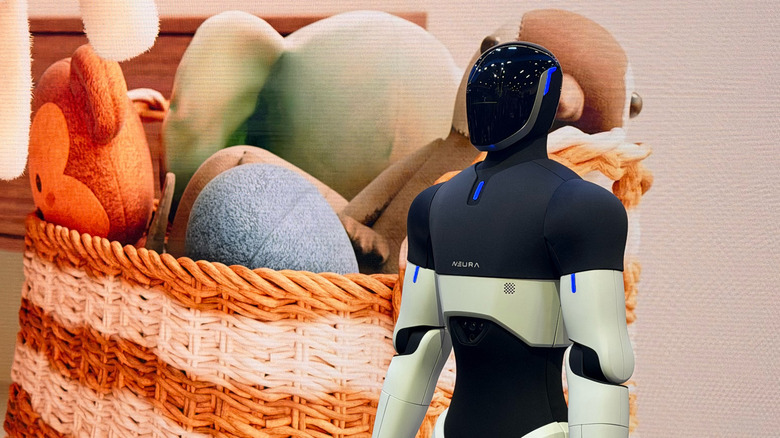
The recent CES 2026 event shed light on the increasing trend in the robotics industry, particularly the emergence of humanoid robots. Over the years, there has been a notable shift from fast quadruped robots to advanced humanoid machines that are now being deployed by companies and early adopters. While there is a growing interest in these innovative devices, there is still much room for development and exploration.
Despite the potential for humanoid robots to revolutionize smart homes in the future, there are significant challenges that need to be addressed. These robots come with a high price tag, are still undergoing software development, and lack the autonomy required for independent operation, notwithstanding their impressive hardware capabilities.
One notable company, 1X, made headlines with the launch of its Neo humanoid robot. However, the initial version required human intervention to perform tasks. To address this limitation, the company introduced a significant software update called 1X World Model, which enables the robot to learn and respond to voice or text prompts independently. By incorporating hand sensors, the company aims to enhance the robot’s functionality and prevent unrealistic behaviors.
Another key player, XPENG, introduced its eighth-generation humanoid robot renowned for its precise walking capabilities. Rather than targeting household use, XPENG positions its robots as personal assistants for retail environments, receptionists, and tour guides in showrooms.
Neura unveiled a groundbreaking neural network at CES 2026, allowing robots to share knowledge and enhance their collective learning. With the introduction of 4NEO gen 3.5 featuring advanced environmental awareness using skin-like material, Neura pushes the boundaries of robotic innovations.
While these companies are at the forefront of humanoid robot development, widespread adoption and utility are still years away. The current stage of humanoid robots necessitates further advancements in software integration and AI development to enable them to perform everyday tasks effectively.
As the industry moves forward, regulatory frameworks will play a crucial role in defining the capabilities and limitations of humanoid robots in real-world scenarios. While the hardware of these robots is promising, a more sophisticated software ecosystem and integrated AI are essential for unlocking their full potential.
In conclusion, while humanoid robots hold promise for the future, it will require time and concerted efforts from companies to refine their functionality for mainstream adoption. The journey towards integrating these advanced technologies into our daily lives is ongoing, and we can anticipate significant strides in the coming years.
About the Author