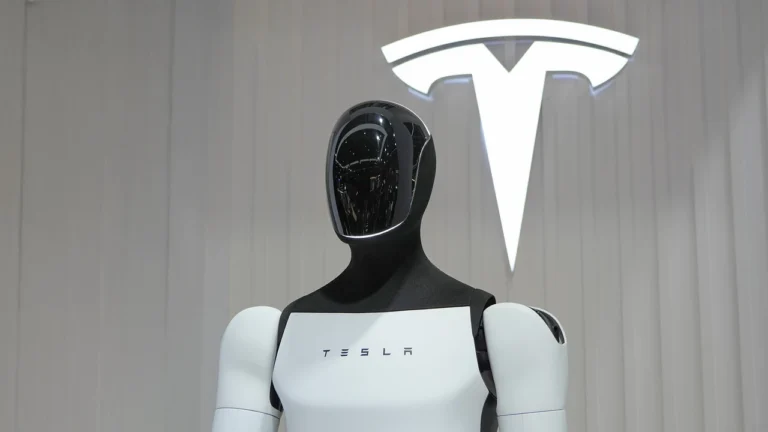
The commercial and industrial sectors are experiencing a significant drop in prices as production in the humanoid robot industry surges. Chinese robot manufacturers are introducing more affordable models due to advancements in manufacturing, localized supply chains, and increased production volumes, leading to a new phase of commercial adoption.
Unitree Robotics unveiled its R1 dual-arm humanoid robot with a starting price of 26,900 yuan ($3,968), making it the company’s most affordable model yet. Noetix Robotics introduced its Bumi robot priced at 9,998 yuan, marking one of the first consumer-oriented humanoid robots under the 10,000-yuan threshold. Booster Robotics also launched its K1 series starting at 29,900 yuan. This price decline is also evident in the industrial sector, with industrial humanoid robots now entering the sub-100,000-yuan range. For example, Astribot’s T1 humanoid robot starts at 89,900 yuan.
This shift represents a significant change from just a few years ago when humanoid robots in China typically commanded prices in the hundreds of thousands of yuan. Unitree reported a decline in the average selling price of its humanoid robots from 593,000 yuan in 2023 to 167,000 yuan in the first three quarters of 2025. Similarly, Leju Robotics noted a nearly 26 percent year-on-year drop in the average selling price of its Kuavo series in 2025 to 308,100 yuan per unit.
Industry experts attribute the widespread price drop to various factors such as increasing shipment volumes that allow companies to distribute R&D expenses and production costs, leading to lower unit costs. Domestic humanoid robot shipments are on the rise, with expectations to exceed 100,000 units and possibly reach 200,000 units in 2026. Chinese suppliers have also made significant advancements in critical components like reducers and servo systems, reducing procurement costs industry-wide.
Manufacturers like Unitree have shifted towards developing and manufacturing core components in-house, leading to a decline in production costs. Leveraging supply chains developed for electric vehicles and consumer electronics has also helped control manufacturing costs. Automotive companies are recognizing the potential of humanoid robots, with some, like Shuanglin Group, venturing into the humanoid robot sector by leveraging shared technologies and expertise. Major automakers such as Tesla, Mercedes-Benz, and others are actively participating in the embodied intelligence sector, indicating the industry’s expanding opportunities and growth potential.
About the Author