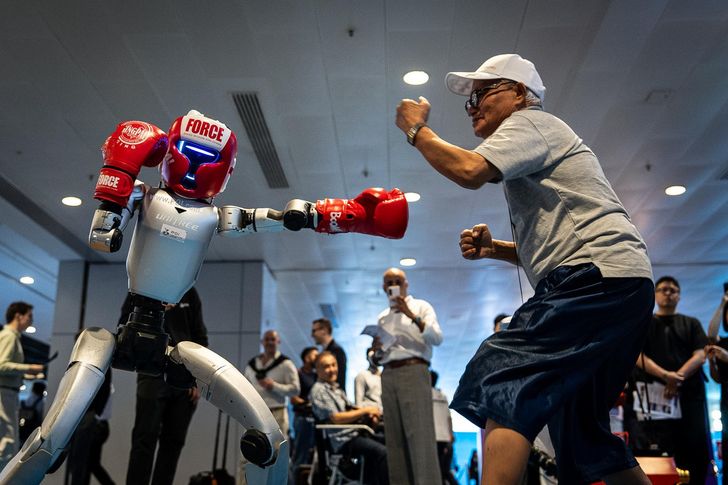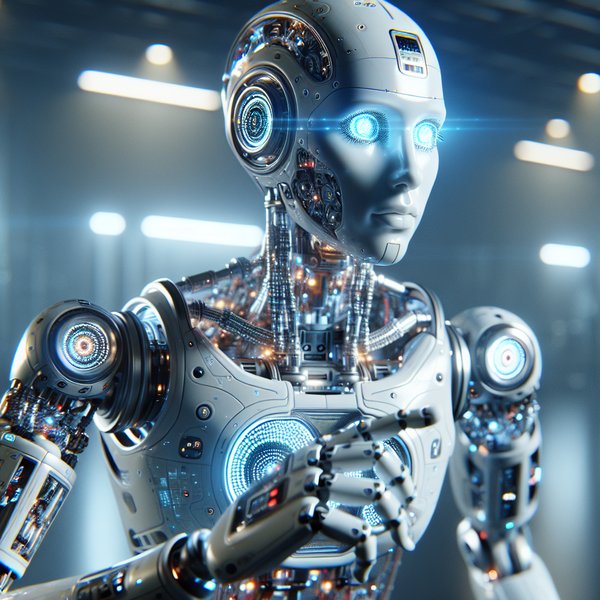
A rapidly advancing startup striving for a robotic revolution has once again proven that their humanoid robots are ready to move out of the labs and into factories, with potential future applications in our homes. A major highlight during the demonstration led by the company’s founder, Brett Adcock, was the robot’s method of movement. Unlike older machines that followed rigidly programmed scripts, Figure 03 relies on “AI-generated movements”. This means that for each step, handshake, or body stabilization, a neural network is responsible, rather than traditional code lines. The robot stands around 168 cm tall, weighs close to 60 kg, and boasts human-like proportions, enabling it to operate in environments designed for humans.
Shawn Ryan, testing the machine’s responsiveness, noted its delicate foam finish and inquired about its durability. Adcock candidly admitted that while the robots undergo advanced simulations, falls in the real world can still be risky – sometimes resulting in “a broken neck”. Nevertheless, there has been significant progress in motor coordination. Figure 03 features 40 joints powered by electric motors, with its hands being engineering masterpieces: capable of lifting crates weighing up to 18 kg, making it an ideal candidate for work in logistics centers.
Interestingly, the charging system is entirely wireless – the robot replenishes its energy (sufficient for 4-5 hours of operation) by simply standing on a special charging mat. It is well acknowledged that companies behind robots aim beyond mere presentations, even the most spectacular ones. Adcock compares the current stage of humanoid development to the early years of smartphones, predicting that each subsequent generation (similarly to successive iPhone models) will bring a significant improvement in capabilities.
The company no longer builds prototypes in a garage – it owns a fully functional factory, currently capable of assembling one robot in around 90 minutes. Ultimately, the startup aims to produce millions of units annually, striving towards the vision of a “robot for every individual”. Figure AI machines are already undergoing tests at BMW plants, proving their worth in challenging production environments. The close proximity of this technology to the mainstream is evident by a recent appearance of a Figure robot at the White House, welcoming guests during an event dedicated to artificial intelligence.
Transitioning from experimentation to official state presentations took the company a mere four years, which is truly impressive. Certainly, fulfilling ambitious goals remains a long journey, but if achieved, robots may cease to be novelties in the next few years and become a part of daily life.
About the Author