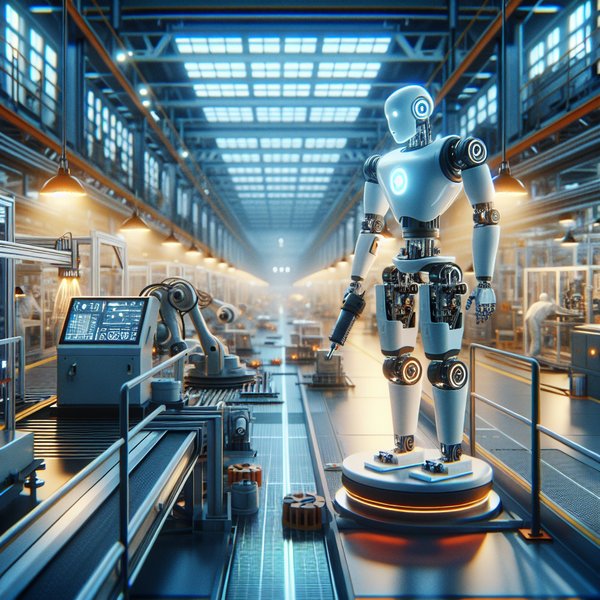
Humanoid robots took center stage at an industry trade fair in Hanover this week, showcasing the latest advancements in artificial intelligence (AI). Chancellor Merz emphasized the importance of AI technologies in revitalizing the German industry, although China currently leads in this sector.
One of the highlights of the fair was a blue-eyed humanoid robot demonstrating its “physical AI” skills by carefully handling tools. Created by the German startup Agile Robots, this robot symbolized the potential for AI to enhance productivity in Germany’s manufacturing sector, which has faced challenges in recent years.
Agile Robots’ CEO, Rory Sexton, highlighted the practical applications of AI-boosted robots in solving industrial problems. The company plans to integrate these technologies into German factories, especially within the automotive industry, to drive efficiency and innovation.
At the trade fair, Chancellor Merz visited the Agile Robots stand and expressed support for incorporating AI into key industrial sectors and small to medium-sized enterprises. He stressed the importance of creating industrial value and high-quality jobs through AI implementation.
While China has made significant strides in humanoid robot development, German manufacturers are striving to catch up. Agile Robots aims to bridge this gap by focusing on industry-specific tasks rather than entertainment-oriented applications like dancing or martial arts.
Despite the optimism surrounding AI’s potential to address labor shortages and enhance productivity, some industry experts remain cautious. Jochen Heinz from SW Machines raised concerns about the potential drawbacks of AI, such as inaccurate instructions for repairs or error-prone problem detection.
Germany’s strong foundation in mechanical engineering and automation, coupled with its rich industrial data resources, positions the country well in the AI race. However, there is a need for a more cohesive strategy to leverage this data effectively to drive industry advancements.
As the industry continues to navigate the complexities of integrating AI technologies, ongoing discussions and developments are essential to ensure a balanced and effective approach to adopting AI in manufacturing processes.
About the Author