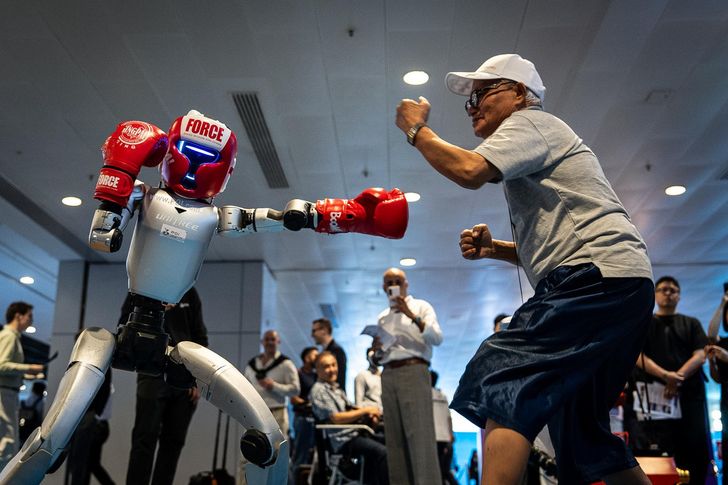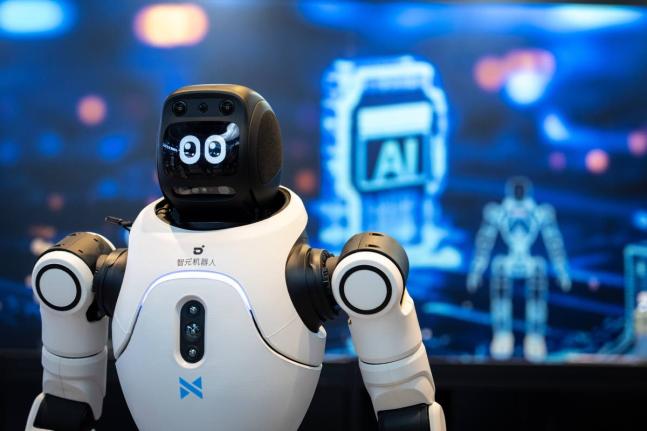
A humanoid robot, resembling a primary school student in size, made an impression in Hong Kong by singing songs, conversing in Mandarin and English, and engaging with the audience. The robot was among over 100 robots displayed at the Hong Kong Convention and Exhibition Center during two recent exhibitions. The X2 Ultra robot, created by AGIBOT Innovation (Shanghai) Technology Co from China, demonstrated its diverse interests when asked about its hobbies, which ranged from sports and dancing to technology and music.
Calvin Chiu, the chief operating officer of Novautek Autonomous Driving, AGIBOT’s agent in Hong Kong, highlighted that robots like the X2 Ultra can provide emotional fulfillment through conversations and serve as teachers to both older adults and children. He noted that robots can be programmed with different personalities, making them relatable and friendly to interact with, akin to having a companion.
In China, technological advancement, including in the field of humanoid robots, is a point of competitiveness with the United States, carrying national security implications. The country’s latest five-year plan emphasizes the development of cutting-edge science and technology, aiming to accelerate the progress of products like humanoid robots. By 2030, China intends to focus on enhancing its technological capabilities, with an emphasis on humanoid robotics.
London-based technology research group Omdia identified AGIBOT, Unitree Robotics, and UBTech Robotics Corp as leading vendors in the global market for general-purpose embodied intelligent robots. These companies, with high shipment numbers in 2025, are at the forefront of the development and distribution of humanoid robots. The showcased advancements, such as the ability to converse, perform physical activities like backflips and martial arts, and even engage in security demonstrations, signify the evolving capabilities of these robots.
Foreseeing the future of robotics, including robots that emulate human characteristics like emotions, facial expressions, and breathing, industry experts like Robert Chan from EngineAI foresee a shift towards more lifelike interactions with humans. At the exhibition, companies demonstrated humanoid robots designed for customer service and tour guide roles, with Wang Zuhua from Shenzhen DX Intech Technology Co highlighting the potential applications in museums and government settings.
The humanoid robot industry continues to evolve, with innovations focused on enhancing interactions with humans and expanding the roles these robots can perform in various sectors. The showcase in Hong Kong underscored the advancements in technology and the potential for humanoid robots to become integral parts of everyday life.
About the Author