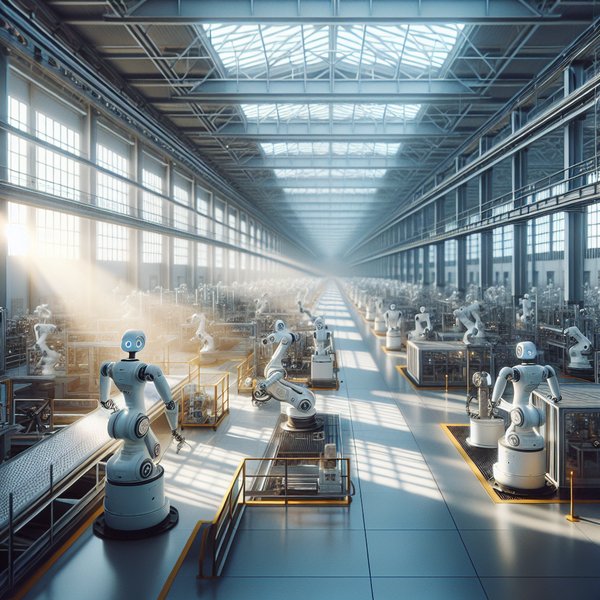
At a major industrial trade fair in Germany, an intriguing demonstration of “physical AI” skills captivated onlookers as a blue-eyed humanoid robot adeptly handled tools. The robot, created by German startup Agile Robots, was just one of many showcasing their abilities at the event. This showcase highlighted the prospects of an AI-driven transformation in Germany’s manufacturing industry, which has historically faced challenges. The integration of AI technologies into industrial operations, an area where Europe holds significant expertise, is viewed as a strategic pathway for the region to compete with the US and China in the AI race.
Rory Sexton, the CEO of Agile Robots, shared that AI-empowered robots have the potential to address real industrial issues effectively. The company aims to equip German factories, particularly in the automotive sector, starting next year, aiming to bolster efficiency in Europe’s largest economy. Emphasizing the significance of AI for hands-on tasks, referred to as physical AI, the world’s largest industrial technology fair in Hanover put a spotlight on this aspect this year, drawing over 3,000 exhibitors.
Chancellor Friedrich Merz endorsed the push to enhance German manufacturing capabilities by embracing AI technologies, particularly in small and medium-sized enterprises, key players in the German economy. While German manufacturers are striving to catch up with Chinese advancements in humanoid robots, experts like Sexton believe that Germany’s foundation in mechanical engineering and automation, combined with its rich industrial data resources, positions it favourably in the AI landscape.
Despite the optimism surrounding AI integration, some industry experts, like Jochen Heinz from SW Machines, cautioned about potential pitfalls such as erroneous instructions and false problem detections. Nonetheless, the consensus remains positive, with a majority of industrial firms in Germany considering humanoid robots as a solution to mitigate skilled labor shortages. The country’s strong industrial data reserves and expertise place it in a unique position globally.
While challenges persist, such as fragmented use of data and lack of a cohesive strategy, Germany’s commitment to leveraging AI for industrial growth remains steadfast. The ongoing dialogue and advancements in AI applications in manufacturing underscore a collective effort to embrace technological innovation and enhance industrial competitiveness.
About the Author