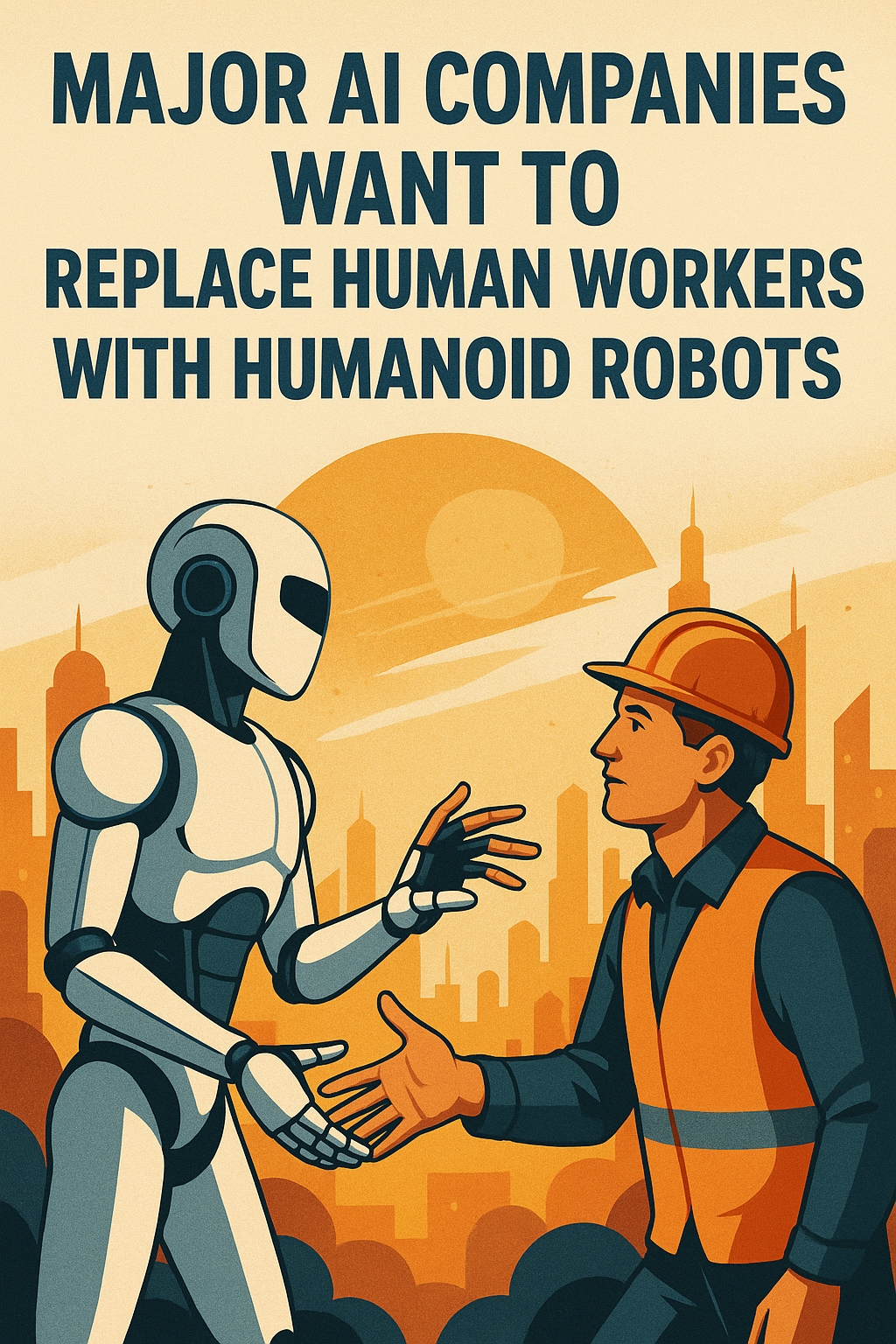
AI-Companies-aiming-to-replace-Human-Workers-with-humanoids
Humanoid robots are no longer a figment of science fiction; rather, they are rapidly becoming a visible presence on a global scale, particularly within shipyards. Major U.S. AI firms are aggressively pushing the boundaries to bring these advanced technologies into reality. The American Bureau of Shipping (ABS) has recently forged a partnership with Persona AI, a Houston-based company, to introduce industrial-grade humanoid robots for shipbuilding, inspection, and maintenance operations. This collaboration signifies a significant step forward towards modernizing the maritime industry.
Unlike conventional factory robots, humanoids possess the ability to navigate complex human-engineered environments, such as climbing ladders, accessing confined spaces, and working in areas inaccessible to rigid machinery. This level of flexibility makes them well-suited for shipyards that are designed around human workflows. ABS and Persona AI will work together on engineering endeavors and gather practical operational data to establish classification standards for humanoid robots. These standards will underpin the certification process for deploying humanoid robots in intricate maritime settings, ensuring safety and regulatory compliance.
John McDonald, president and chief operating officer of ABS, expressed pride in spearheading the safe integration of emerging technologies within the maritime sector. The collaboration with Persona AI underscores their dedication to innovation and safety, with the aim of setting benchmarks and protocols that will facilitate the reliable and secure performance of humanoid robots in shipyard environments. By amalgamating cutting-edge robotics with ABS’s extensive certification and safety expertise, the partners are contributing to shaping a smarter and safer future for shipbuilding activities.
Persona AI’s CEO, Nic Radford, highlighted that humanoid robots are transitioning from conceptualization to certified deployment, swiftly evolving into operationally feasible solutions. These robots leverage NASA-derived hand technology and are specifically engineered for dynamic and unstructured environments. Their role is not to supplant human workers but rather to manage hazardous, repetitive, or labor-intensive tasks, thereby enhancing workplace safety and productivity, which is crucial in shipyards facing high attrition rates and challenges in retaining skilled labor.
Similar initiatives are also gaining momentum in Asia, with companies like HD Korea Shipbuilding, HD Hyundai Robotics, and Vazil actively engaged in developing welding-capable humanoid robots, aiming for prototypes by 2026 and full deployment by 2027. Neura Robotics is conducting trials of its 4NE1 humanoid at Hyundai shipyards to enhance precision welding capabilities. Despite the enthusiasm surrounding this cutting-edge technology, widespread adoption faces obstacles, with projections indicating that the humanoid robot market may only reach 40,000 units by 2032 due to factors like cost, durability, and regulatory complexities. Some competitors argue that modular or specialized robots could potentially outperform humanoids in certain task categories.
In conclusion, the integration of humanoid robots into shipyards represents a significant advancement in leveraging technology to improve efficiency, safety, and productivity in maritime operations. As the industry continues to embrace innovation, collaborations between companies like ABS and Persona AI pave the way for a future where humanoids seamlessly coexist with human workers, ushering in a new era of smarter and safer shipbuilding practices.
About the Author