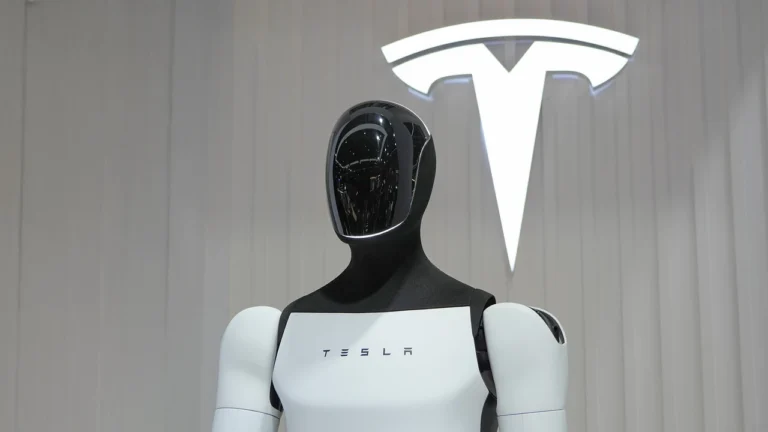
Unitree Robotics Secures IPO Approval in Shanghai. The humanoid specialist plans to raise billions for research and development. Unitree Robotics, a leading manufacturer of humanoid robots, received approval for an initial public offering (IPO) on the STAR Market of the Shanghai Stock Exchange on June 1, 2026. This marks the first major IPO of a humanoid specialist in the Chinese A-share market.
As Chinese robotics pioneers venture into IPOs, significant capital is flowing globally into the future’s key technologies. This report reveals the companies currently leading in the integration of AI and robotics. Just 73 days after the initial filing on March 20, 2026, the regulatory authority gave the green light in an unusually swift process, underscoring the strategic importance of the company.
Unitree plans to raise approximately 42 billion Yuan (around 5.4 billion Euros) by issuing at least 40.4 million shares. The post-IPO valuation is estimated at around 420 billion Yuan (approximately 54 billion Euros). The majority of the raised capital, 85 percent, will be allocated to research and development. About 20 billion Yuan is earmarked for the development of “Embodied AI” models – artificial intelligence integrated into physical bodies – aiming to reduce reliance on foreign technology providers.
Major investors include tech giants such as Meituan (holding a 9.65 percent stake), Tencent, and Alibaba. Founder Wang Xingxing retains control over 68.78 percent of the voting rights. Financial figures paint an impressive picture: Revenue surged from 1.6 billion Yuan in 2023 to 17 billion Yuan in 2025, while the gross margin improved from 44 to 60 percent.
However, the latest quarterly report sheds light on the challenges of the expansion strategy: Although revenue increased by 68.5 percent to 4.2 billion Yuan in the first quarter of 2026, net profit plummeted by more than half to just 40 million Yuan, attributed to significantly increased research costs.
In tandem with the IPO, Unitree announced a new research collaboration with Nvidia to develop a humanoid robot system for research institutions. This system combines Unitree’s H2 hardware with Nvidia’s Jetson-Thor platform based on the Blackwell GPU architecture and will be deployed at prestigious institutions like Stanford University, ETH Zurich, and UC San Diego. Sales are set to commence in 2026, with an enhanced version, the H2 Plus, scheduled for release in October 2026.
Unitree already generates over 40 percent of its revenue internationally and delivered over 5,500 humanoid robots in 2025. Unitree isn’t alone in its endeavors. On May 31, 2026, Chengdu CRP Robot Technology (CRP Robot) filed IPO documents in Hong Kong. As a leading welding robot manufacturer, CRP Robot aims to capitalize on the automation trend, with recent revenue hitting 3.2 billion Yuan.
In Hong Kong alone, at least 46 robotic-related companies are currently in the IPO process. Following a record year in 2025, where China contributed approximately 50 percent of global industrial robot installations and produced 85 percent of all humanoid robots, the rush to the stock market reflects the dawn of a new era reshaping the global market through AI and robotics.
Financial experts have analyzed where the significant investments in this industrial revolution are truly headed in a recent free report. The next industrial revolution is already underway – do you know the companies driving it? Despite a 13 percent decline in humanoid robot stocks in 2026 following a 47 percent increase the previous year, the long-term outlook remains optimistic.
Barclays investment bank projects that humanoid robots could replace around 3.8 percent of China’s total workforce by 2035. Suppliers stand to benefit as well. Manufacturers of bionic hands and tactile sensors like BrainCo anticipate a surge in demand in 2026 as Unitree and other manufacturers ramp up production of multi-fingered robot systems.
About the Author