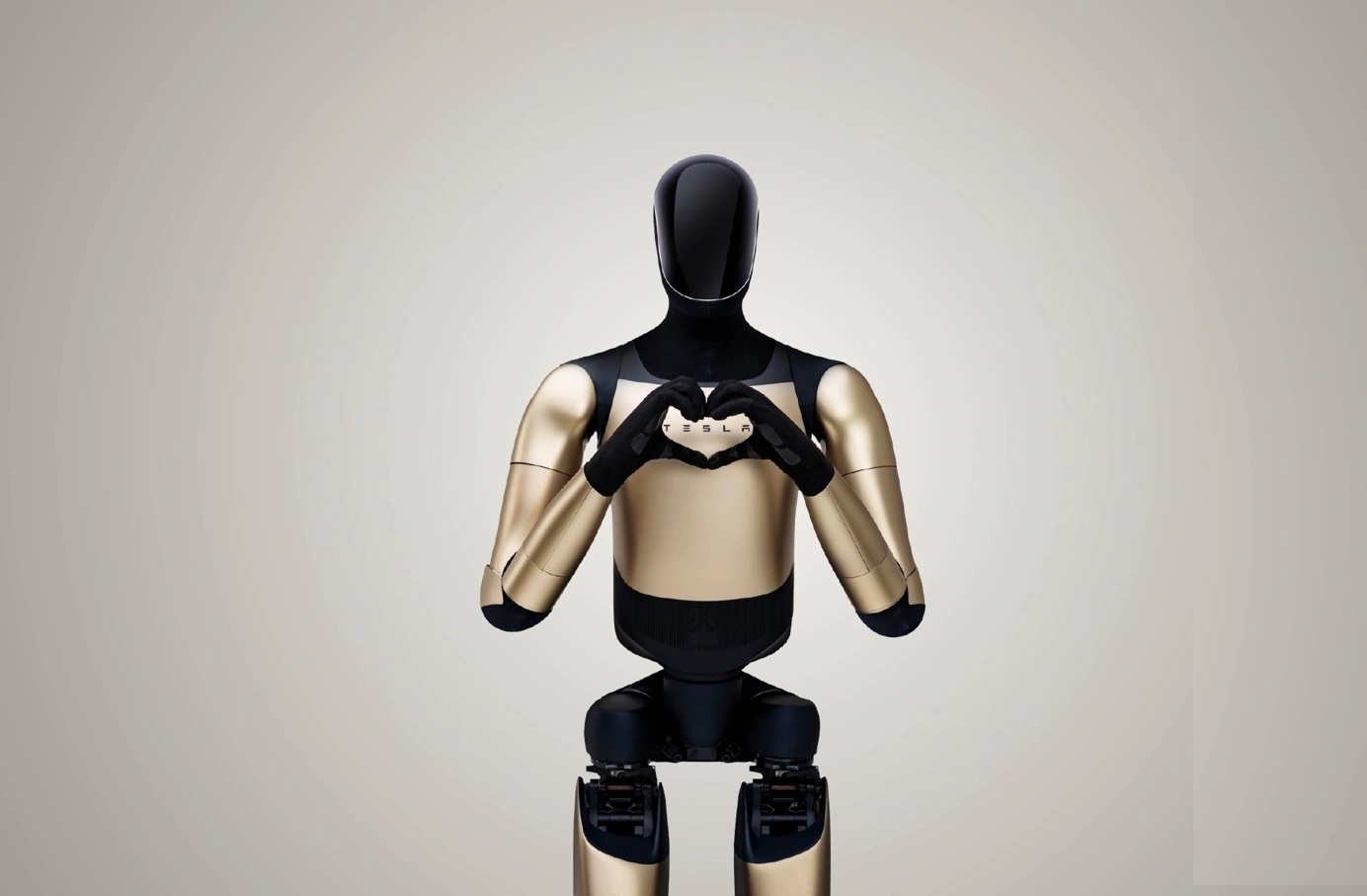
Elon Musk, the CEO of Tesla, revealed at the Abundance Summit conference on March 11, 2026, the timeline for the launch of the humanoid robot Optimus 3. Musk announced that the production of the device is scheduled to start in the summer of the current year. Initially, the production volume will be limited but will increase following the typical S-curve production model. Describing the innovation as the most advanced robot in the world, Musk highlighted that Optimus 3 will be unmatched by any existing developments.
Optimus 3 will be the third iteration of the humanoid robot developed by Tesla since 2022, with its predecessor Gen 2 showcasing capabilities such as walking at a speed of 0.6 meters per second, sorting 4680 battery cells, and featuring 22 degrees of freedom in its hands for delicate object manipulation. According to Musk, the new model will incorporate a significantly higher level of artificial intelligence, enabling it to learn new actions by observing humans without the need for specific motion programming.
The core of the system will be Tesla’s proprietary onboard computer FSD (Full Self-Driving) version 15, tailored for embedded intelligence tasks. Tesla’s production strategy for robots involves a phased scaling approach, with the first assembly line with a capacity of up to one million units per year set to be established at the company’s Fremont plant in California. Meanwhile, groundwork is underway at the Giga Texas gigafactory site for the construction of a separate facility with a projected capacity of 10 million robots per year, marking a significant expansion in production.
Musk projected the upcoming rollout to be the fastest in history for complex industrial products. The transition to large-scale production is anticipated with the next generation – Optimus 4, targeted for completion in 2027, primarily to be manufactured in Texas in much larger quantities. Tesla plans to annually update its robot lineup to achieve rapid technological advancement.
Despite advancements, cost remains a critical barrier for the widespread adoption of Optimus. Analysts estimate that leveraging Tesla’s in-house components, vertical integration, and economies of scale could reduce production costs per robot to $20,000, akin to the price of an inexpensive car, creating opportunities for applications beyond industry into household use.
A key distinguishing feature of Optimus 3 is its fully independent supply chain for components. By designing all key components – actuators, sensors, power supplies, and computing modules – in-house based on fundamental principles, Tesla aims to maintain long-term technological control despite lengthening the production debugging phase.
Additionally, Tesla, in collaboration with Musk’s company xAI, is developing a software product named Digital Optimus, described as “artificial intelligence for office workers” that can automate routine computer operations by observing and replicating human actions. This showcases Tesla’s strategy to automate not just physical labor but also intellectual tasks, aiming for a comprehensive automation approach.
The humanoid robot market competitiveness is escalating with Chinese manufacturers, Boston Dynamics with commercial versions of Atlas, Figure AI supported by Microsoft and OpenAI, and Google DeepMind offering the base model Gemini Robotics to third-party manufacturers. Tesla’s success with Optimus depends not only on the technical excellence of the robot but also on its ability to organize profitable large-scale production at unprecedented levels for the industry. Musk has identified China as the main competitor in this sector.
For press releases and inquiries: news@upweek.ru
About the Author