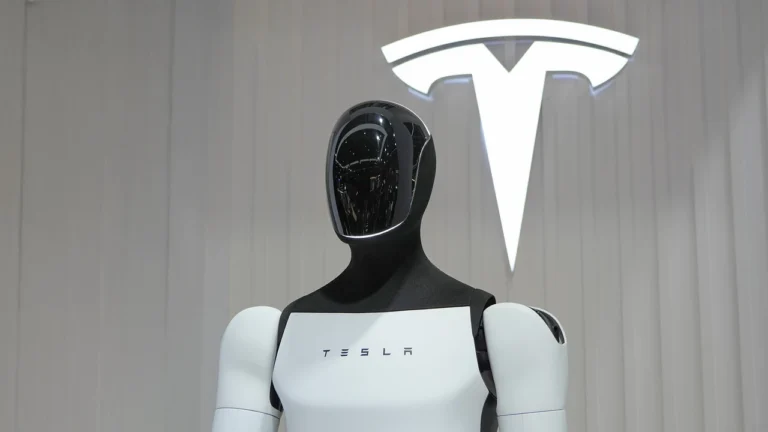
The Lunar New Year Gala showcased dozens of humanoid robots performing martial arts feats, highlighting China’s strategic lead in robot technology. The annual CCTV gala in China has evolved beyond a cultural event to become a barometer of Beijing’s industrial policy. This year, four startups – Unitree Robotics, Galbot, Noetix, and MagicLab – took center stage, as reported by Reuters. Behind the choreographies and demonstrations of robotic “drunken boxing” lies a harsh economic reality. China supplied 90% of the 13,000 humanoid robots shipped worldwide last year. According to Morgan Stanley, humanoid robot sales in the Chinese market are projected to double this year to reach 28,000 units.
This surge is driven by significant public orders and eased market access for companies showcased at the gala. Beyond technical performance, China’s “AI+” strategy aims to integrate AI into robots to address the significant aging of the Chinese workforce, making automation an economic survival necessity in China. This political commitment is directly supported from the state’s top echelon. The founder of Unitree was notably received by President Xi Jinping, sending a strong signal to investors.
The year 2026 is poised to mark financial maturity for China’s robotics sector, with expected IPOs from major players like AgiBot and Unitree. These funding rounds are set to expedite the deployment of these machines in factory assembly lines, fundamentally transforming the everyday work environment, leading to human-robot collaboration known as cobotics. Technological advancements include multi-robot coordination and fault recovery, allowing robots to adapt their movements in real-time using AI models.
The recent progress in software development by Unitree enables tackling complex tasks in an industrial setting. This technical edge is starting to concern Western players, as Elon Musk poetically alluded to China’s prowess in embodied AI. While the West focuses on language models, Beijing appears ahead in AI embodiment. The real challenge for European and American companies will be to maintain competitiveness against a Chinese industry capable of producing sophisticated robots on an unprecedented scale and cost-effectively.
The real threats lie in the increasing use of AI by adversarial state actors and cybercriminal groups, as evidenced by a zero-day exploitation code developed using AI by groups from North Korea and China. NVIDIA’s massive capital deployment and the closure of Digital College underscore the evolving landscape driven by AI. The integration of AI tools in various aspects like note-taking and interview preparation necessitates careful consideration to balance convenience with privacy and authenticity. Overall, the rapid advancements in AI technology underscore the need for strategic adaptations for both industries and individuals in the evolving digital landscape.
About the Author