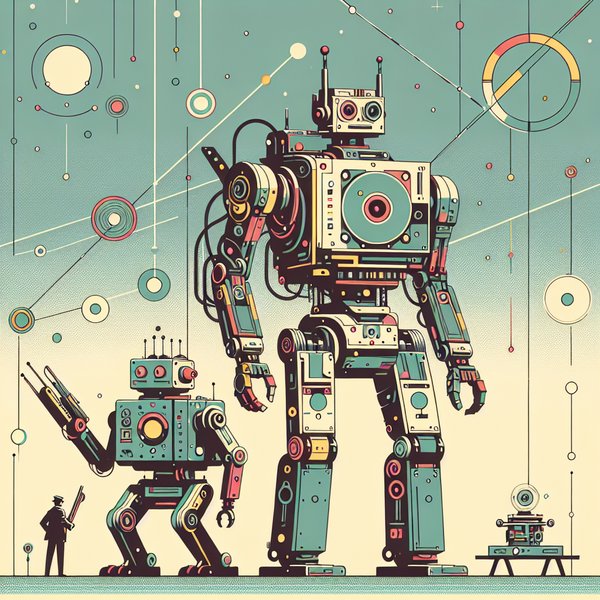
At the turn of the twentieth century, the idea of a mechanical substitute for human workers, known as a “robot,” gained popularity worldwide. The term “robot” was coined by Karel Capek, a Czech writer who drew inspiration from the Czech word “robota,” meaning forced labor. In a thought-provoking article titled “Techno-Utopias And Robots In China’s Past Futures” included in the anthology Proletarian China: A Century of Chinese Labour, Craig A. Smith delves into the early portrayal of robots in Chinese literature, resembling Western science fiction from that era.
Classical Chinese texts featured the concept of animated or mechanical humanoid laborers dating back to ancient times. Mozi, a philosopher from the fifth century BCE, even crafted mechanical animals and is now honored through a technology company bearing his name. Despite this historical presence, the term “机器人” (meaning robot in modern Chinese) transitioned from exclusive writings to mainstream imagination around the end of the Qing Dynasty. During the same period, global fascination with humanoid automatons and their potential for labor peaked, exemplified by the Tin Woodman from The Wonderful Wizard of Oz, a poignant cyborg longing for a heart.
In Chinese fiction, automatons with distinct Chinese attributes emerged during the early 1900s. Wu Jianren’s serial novel The New Story of the Stone in the Southern News from 1905 to 1906 introduced labor automatons with a Chinese flair. Another significant figure, Kang Youwei, envisioned a world devoid of suffering in his Book of Great Unity, completed around 1902. Kang’s vision featured robots as key components in his Confucian utopia, where they would take on tasks traditionally performed by slaves or servants, allowing laborers to focus on artistic pursuits.
Kang’s optimistic view of advancements in technology eliminating menial labor resonated with revolutionary thinkers like Mao Zedong in their younger years. However, Kang’s advocacy for constitutional monarchy led to him being viewed as a conservative against revolutionaries. Throughout the twentieth century, the belief in science’s capacity to liberate individuals persisted, showcasing a utopian hope for a future characterized by leisure and creativity instead of toil.
About the Author