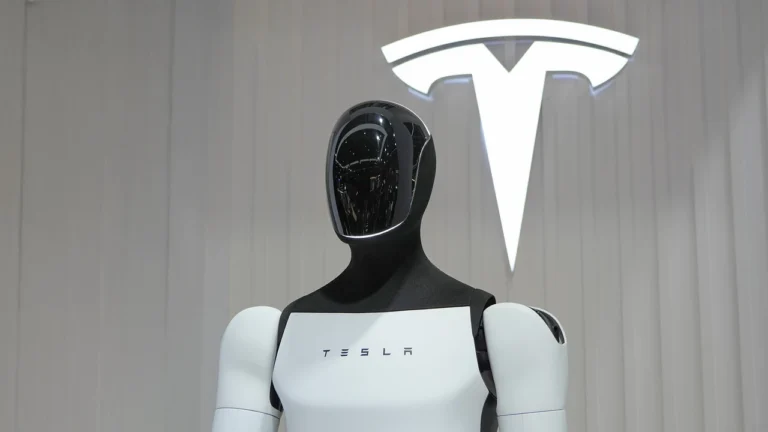
Elon Musk has recently provided an exciting update on Tesla’s humanoid robot, Optimus. In a video shared by Tesla, Optimus is shown learning new tasks by observing humans, akin to how we learn from tutorial videos. This innovative approach marks a significant departure from traditional robot programming methods, moving Optimus closer to mimicking human learning processes. By assimilating actions from daily interactions, the robot stands to enhance its functionality significantly and acquire new skills more rapidly.
According to Musk, Tesla aims for Optimus to analyze real-world videos, such as those found on YouTube, and apply the acquired knowledge to perform similar tasks autonomously. Milan Kovac, an engineering lead at Tesla, highlights that this breakthrough has already enabled Optimus to undertake tasks like vacuuming, sorting items, cooking, and handling household chores. This novel learning strategy eliminates the necessity for intricate programming for each task, enabling the robot to imitate human actions and respond to simple voice or text commands.
Musk envisions this method providing Optimus with “task extensibility,” allowing it to quickly learn diverse tasks from appropriate video demonstrations. Tesla has showcased Optimus engaging in various activities through brief videos, ranging from cleaning and assembling items to dancing. Despite skepticism following previous demonstrations suggesting human intervention in Optimus’s actions, Musk strongly believes that video-based learning represents a pivotal milestone.
Musk hails Optimus as a potentially transformative product, surpassing even Tesla’s automobile division in value in the future. He anticipates mass production of the robot, with potential deployment in Tesla factories by late 2025 or earlier, contingent upon rapid progress. This advancement could revolutionize development processes as developers may forego extensive coding in favor of instructing Optimus through visual demonstrations, allowing the robot to learn by observation and imitation, much like humans.
Although the concept holds promise, experts note that Tesla’s current robots lag behind in fine motor skills and mobility compared to industry leaders like Boston Dynamics. While the path ahead seems promising, critics emphasize the necessity for further advancements to create versatile robots suitable for both domestic and industrial settings.
About the Author