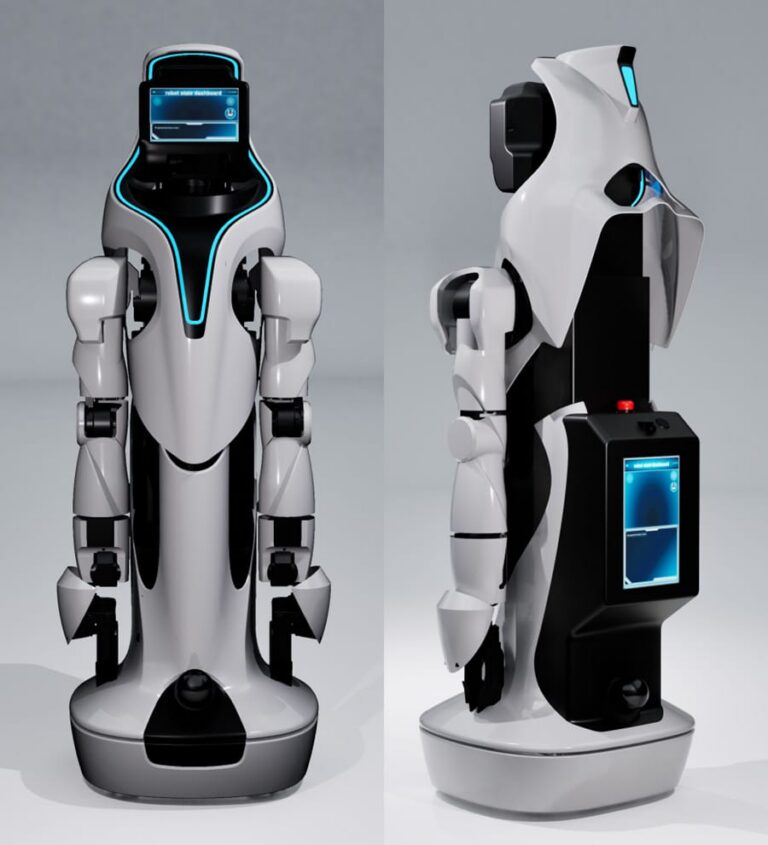
Agility Robotics is at the forefront of the fast-evolving realm of humanoid robotics with its groundbreaking innovation – a sophisticated whole-body control foundation model that serves as the “motor cortex” for its Digit robots. This cutting-edge neural network, with less than one million parameters, is poised to revolutionize the interactions of humanoid robots in dynamic environments by effortlessly handling a wide array of tasks ranging from heavy lifting to disturbance recovery with unparalleled stability and efficiency.
The model draws upon advanced simulation techniques and is exclusively trained within NVIDIA’s Isaac Sim platform, utilizing reinforcement learning to master omnidirectional locomotion and manipulation skills. Agility Robotics recently detailed in a blog post that the system effectively separates high-level planning from low-level control, enabling the creation of intuitive interfaces that streamline teleoperation and behavior imitation.
An outstanding feature of this model is its remarkable zero-shot sim-to-real transfer capability, facilitating seamless transition from virtual training to physical hardware without the need for additional adjustments. This streamlined process is powered by a meticulously curated dataset comprising 2,000 hours of simulated motion, encompassing diverse scenarios like navigating uneven terrain and manipulating objects amidst disturbances.
Experts in the robotics industry commend this approach for addressing long-standing challenges such as underactuation and complex dynamics. A survey published on arXiv underlines how models like this lay a solid foundation for quick adaptation to new tasks, potentially revolutionizing humanoid applications in sectors like logistics and manufacturing.
Agility’s foundation model seamlessly integrates with higher-level AI systems, including large language models for task planning. The director of robotics at Agility, Chris Paxton, highlighted in posts on X by robotics experts the model’s resilience in handling heavy objects and disturbances, positioning it as a versatile platform for acquiring new skills.
Real-world applications of this technology are already making an impact, with Agility’s cloud platform, Arc, enabling easy workflow integration in warehouse settings. Plans are in place to introduce safety-certified humanoids by the end of 2025, capable of operating alongside humans, as revealed in an interview with Agility’s CEO published by Business Insider.
The ongoing advancements by Agility indicate a pivotal moment in August 2025 for humanoid robotics, with investments and new product releases taking center stage. The model’s compact size and low computational requirements make it deployable on edge devices, bolstering its viability for real-world operations.
While there are challenges to overcome in scaling such models for general-purpose use, Agility’s collaboration with NVIDIA on the Jetson Thor integration is geared towards meeting increased compute demands to support more intricate perceptions and decision-making abilities. As efforts continue to refine this foundation model, it has the potential to establish new benchmarks for robotic autonomy by seamlessly blending machine learning with physical intelligence to boost human productivity without supplanting it.
Looking toward the future, the merging of foundation models with humanoid hardware signals a shift towards more intuitive robotic systems with a human touch. The history of Agility Robotics, traced back to Oregon State’s Dynamic Robotics Lab, underscores the academic underpinnings driving these commercial breakthroughs. Ultimately, this whole-body control model exemplifies how targeted AI can bridge the gap between simulation and reality, laying the groundwork for robots that not only execute tasks but also adapt intelligently to the unpredictable nature of human environments. With each passing day in 2025, Agility’s innovative strides are poised to shape the next chapter of practical robotics.
About the Author