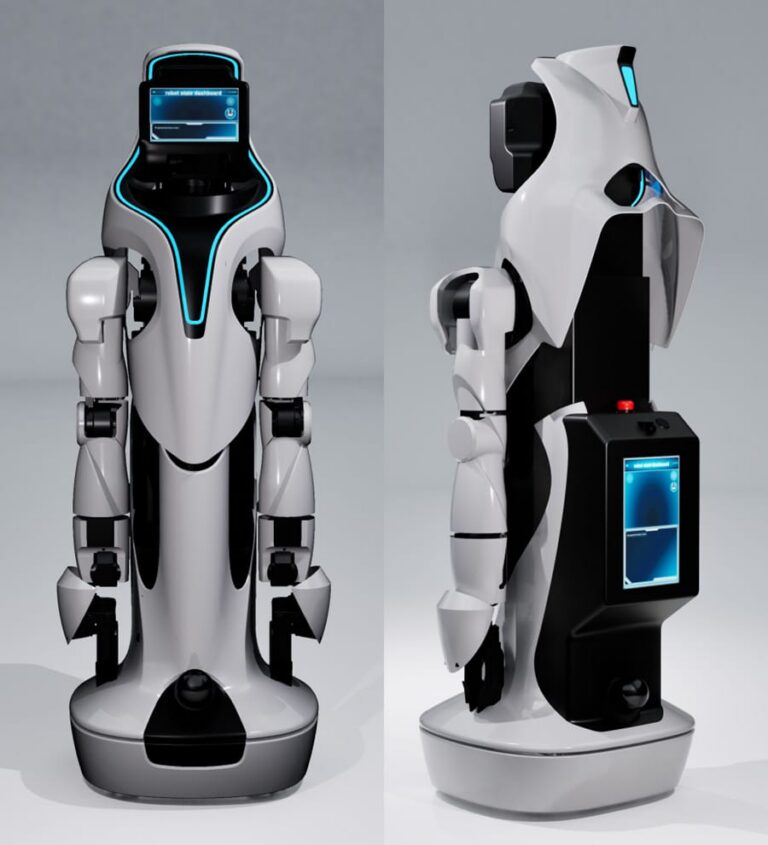
In Guangzhou, southern China’s Guangdong province, a journalist recently had the opportunity to interact with XPeng’s innovative Iron humanoid robotic hand at the company’s headquarters. This cutting-edge technology represents the advancement of physical artificial intelligence research, signaling a significant step toward the integration of AI into our daily lives.
Enactic, a Tokyo-based company, is pioneering human-like robotic arms designed to perform tasks independently. These robots are being developed to address the shortage of staff in Japanese care homes by assisting with chores like dishwashing and laundry. The utilization of VR technology allows operators to control these robotic arms with precise movements, showcasing the potential for AI to enhance efficiency in various industries.
According to Jensen Huang, the CEO of Nvidia, the next frontier in AI is physical AI—robots that can understand and interact with the physical world around them. The tech industry is heavily investing in this field, with predictions suggesting that over a billion humanoid robots could exist by 2050. As demonstrated by impressive videos of advanced androids from Chinese manufacturers, the possibilities for smart robots and autonomous machines are becoming increasingly tangible.
Despite the excitement surrounding these advancements, concerns linger regarding potential job displacement, privacy issues, and the timeline for these technologies to become widespread. Hiro Yamamoto, the CEO of Enactic, emphasizes the importance of safety in developing robots that can coexist with people in dynamic environments like care homes.
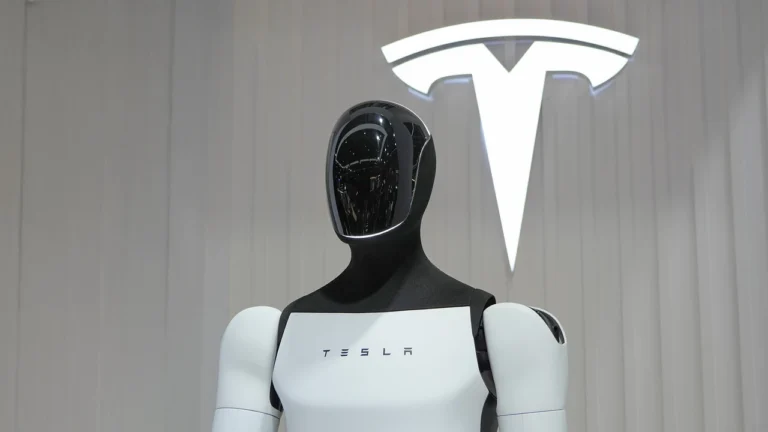
XPeng, a Chinese electric vehicle manufacturer, recently unveiled their Iron humanoid robot, showcasing their foray into physical AI. These robots have the ability to walk and dance autonomously, heralding a new era where robots could potentially perform various human tasks. However, challenges remain in terms of the robot’s capability to handle objects effectively, especially in industrial settings.
As companies like Enactic and US-Norwegian startup 1X strive to train AI models through on-the-job experiences, the potential for humanoid robots to take on diverse roles such as childcare, cooking, and gardening is becoming more feasible. While the road ahead may be challenging, the convergence of AI and robotics holds immense promise for revolutionizing the way we live and work.
Despite the rapid advancements in physical AI, experts caution that there is still a disparity between AI systems and the physical capabilities of robots. Sara Adela Abad Guaman, a robotics professor, emphasizes the importance of aligning AI with the physical attributes necessary for robots to operate effectively in diverse environments. While concerns about the impact of automation on the job market persist, the development of physical AI continues to drive innovation and shape the future of technology.
About the Author