In a recent development, the administration of US President Donald Trump has updated a list of restricted products and entities that are prohibited from being imported into the United States on grounds of national security. Notably, humanoid and quadruped robots have been included in this list. The majority of humanoid robots available in the US market are manufactured overseas, with China being a significant producer.
The Federal Communications Commission (FCC) revealed the addition of “advanced robotic devices” to the restricted list, which already features certain drones, as well as Chinese companies Huawei and China Telecom. The revised list now encompasses what the FCC describes as “mobile robots” – referring to robots that emulate human and animal movements by either standing on two or four legs.
The decision to restrict the import of these foreign-built robots stems from a task force assembled by the White House, which raised concerns about potential cybersecurity risks posed by these robots to critical infrastructure and the overall safety of US citizens. It’s important to note that the Pentagon and Department of Homeland Security retain the authority to grant exemptions in specific cases.
As of now, humanoid robots are predominantly utilized in industrial settings within confined spaces, such as automotive factories and storage facilities. The task force pointed to instances like the one involving French programmer Sammy Azdoufal, who allegedly gained access to data from numerous robotic vacuum cleaners manufactured by Chinese company DJI.
It is crucial to highlight that the ban applies solely to new models of robots and does not impact those already in circulation or authorized for sale in the US. This regulatory move aligns with the current administration’s push to bolster domestic manufacturing capabilities. Moreover, the FCC has extended the restrictions to include foreign-made inverters, which are crucial devices for converting power from sources like batteries or solar panels into usable electricity for the grid.
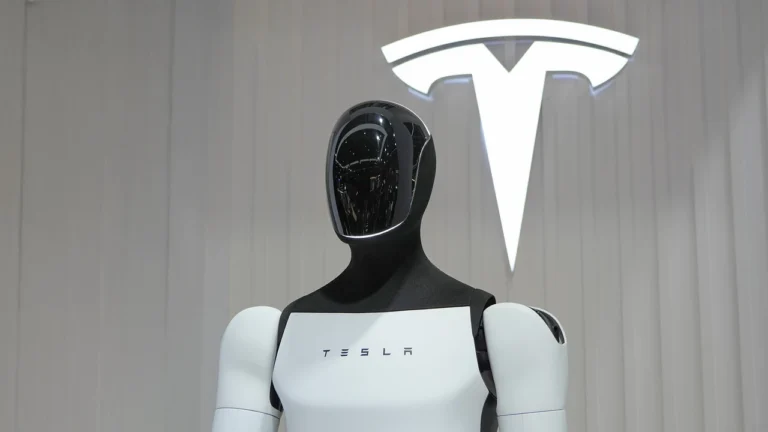
Notably, several robotics companies within the US are already involved in manufacturing humanoid robots, including well-known names like Boston Dynamics, Tesla, Figure AI, and Agility Robotics. Hyundai, a major South Korean automaker, recently acquired Boston Dynamics and plans to establish a robotics facility in the US capable of producing up to 30,000 units annually. Tesla is also set to commence the industrial production of its humanoid robot, Optimus, at facilities in Fremont, California, and Austin, Texas, with projected outputs of millions of robots annually.
It is essential to clarify that Tesla’s efforts will focus on assembly rather than full-scale production. Startups like Figure AI and Agility Robotics are already engaged in assembling robots at their US-based plants, emphasizing the growing trend towards domestic production of advanced robotics. An administration official clarified that the ban encompasses fully assembled robots as well as those pieced together on US soil with over 35% of their components originating from abroad.
About the Author