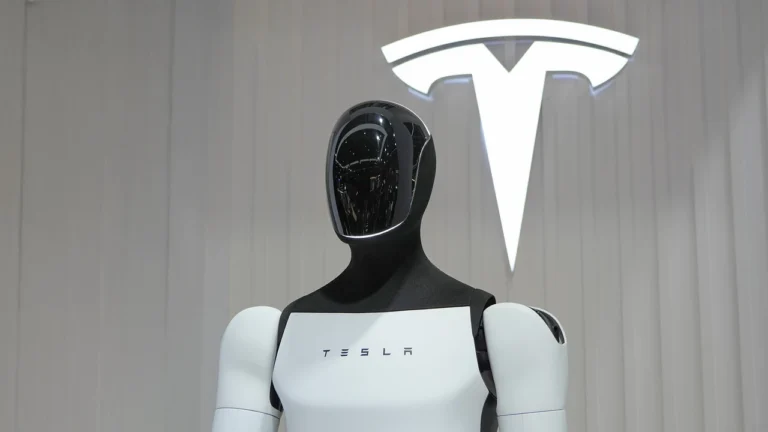
The United States has recently imposed a ban on foreign-made humanoid robots, a sector that Chinese tech companies have dominated. While national security risks were cited as the reason by Washington, analysts believe that the Trump administration is providing an opportunity for US robot manufacturers to catch up. The decision, announced by the Federal Communications Commission (FCC), prohibits the entry of new foreign-made humanoid and four-legged robots into the country due to what they deem as “unacceptable risks” to national security. The concern raised by the FCC revolves around the potential exploitation of data collected by these robots, which could be utilized by malicious actors for surveillance of Americans, assisting foreign intelligence services, or taking remote control of the robots.
This move is widely viewed as targeted at China, the leading country in humanoid robot deployments, accounting for 85% of them last year. Chinese humanoid and quadruped robots are perceived as capable of collecting detailed personal and location data, functioning remotely, and posing risks to critical US infrastructure, with a focus on their dual-use potential for both civilian and military purposes. One prominent Chinese robot manufacturer, Unitree Robotics, has been flagged by the Pentagon for its ties to the Chinese military and the security vulnerabilities present in its robots.
The Trump administration’s interest in protecting the US robotics industry from the influx of low-cost Chinese robots, which often undercut American counterparts in pricing, has been evident through similar restrictions placed on Chinese drones, solar panels, and electric vehicles. The ban is believed to be a strategic move to provide a window for US robotics firms to advance their production capabilities, as China has swiftly ramped up its robot manufacturing.
While the US stands out in developing the intelligent brain of a robot through advanced AI, China excels in mass-producing cost-effective robots with superior mechanical capabilities. The ban has been regarded as a significant step in supporting the US robotics ecosystem by diverse experts in the industry. Critics have expressed concerns that the ban might hinder US AI innovation as researchers heavily rely on budget-friendly Chinese robots for experimentation. Despite such reservations, the ban underscores the administration’s commitment to ensuring US leadership in robotics technology and countering foreign dominance.
Looking ahead, the robotics market is poised for substantial growth, with predictions suggesting it could reach $200 billion by 2035. Visionaries like Elon Musk anticipate immense potential for humanoid robots, envisioning them as a transformative product with long-term sales projections reaching trillions. As the industry continues to evolve, humanoid robots are anticipated to revolutionize various sectors by taking on labor-intensive tasks in warehouses and factories initially, expanding into healthcare, elderly care, and household assistance in the future.
About the Author