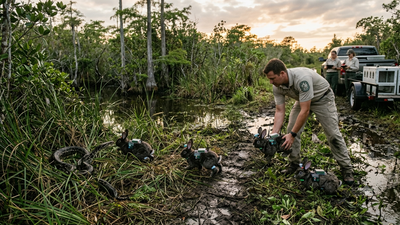
The South Florida Water Management District has introduced a new approach to combat the issue of Burmese pythons invading the Everglades. By using robot rabbits that mimic the appearance and behavior of real rabbits, the aim is to attract and remove the invasive snakes that pose a threat to native wildlife. These pythons have wreaked havoc on the ecosystem, with reports indicating a 95% reduction in small mammals and thousands of birds in Everglades National Park.
Mike Kirkland, the lead invasive animal biologist for the water district, emphasized the challenge of detecting pythons due to their excellent camouflage in the environment. The use of 120 robot rabbits, equipped with heat and scent emissions along with lifelike movements, has proven to be a promising strategy. These solar-powered robots can be remotely activated and monitored through video cameras, signaling the presence of a python for timely removal by contractors.
The initiative addresses the issue of pythons establishing themselves in the Everglades after escaping captivity or being released by owners. These non-native snakes have thrived in the swampy landscapes, posing a significant threat to the local ecosystem. With female pythons capable of laying large numbers of eggs multiple times a year, their population has exploded, reaching estimates ranging from tens of thousands to 300,000 individuals.
Efforts to manage the python population include organized removal programs, with over 23,000 snakes captured since 2000, and public events like the Florida Python Challenge, encouraging participation in hunting and removal activities. The introduction of robot rabbits as bait for pythons represents a novel and potentially effective approach in controlling their numbers. While still in the early stages, initial outcomes have raised hopes for the success of this innovative method.
Ron Bergeron, a member of the water district governing board, emphasized the importance of every python removed in preserving Florida’s environment and protecting native wildlife. The ongoing battle against these invasive predators continues, with a collective effort to mitigate their impact on the delicate balance of the Everglades ecosystem.
About the Author