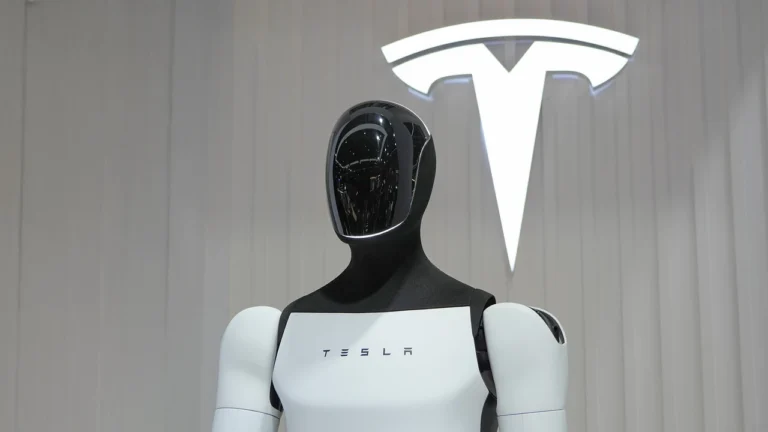
Cooper’s Brewery, a prominent family-owned brewing company in Adelaide, Australia, operates with the assistance of automated guided vehicles (AGVs) instead of traditional human-operated forklifts. These AGVs navigate the factory floor effortlessly, showcasing a future where robots are designed to complete tasks efficiently rather than resembling humans. The debate over whether future robots will mirror human form remains ongoing within the robotics industry. Notable figures like Elon Musk envision humanoid robots revolutionizing manual labor and potentially colonizing Mars.
While past skepticism existed regarding the capabilities of humanoid robots, recent advancements, such as robots outpacing humans in the Beijing half-marathon, indicate significant progress. Bipedal robots are predicted to integrate into the workforce alongside human tradespeople, gradually automating manual labor processes. The potential for robots to possess general intelligence, enabling them to adapt to diverse tasks independently, poses exciting prospects for future industrial applications.
The evolution of robotics extends beyond industrial settings, with innovations like Automated Architecture’s mobile robotic micro-factories streamlining construction processes. As technology progresses, the possibility of robots with varying form factors performing specialized tasks becomes more likely. The question arises whether humanoid robots could emerge as a solution for household chores, with companies emphasizing designs that are less intimidating and more user-friendly.
To improve public acceptance of robotics, companies are developing robots that are engaging and non-threatening in appearance, eschewing overly human-like designs. The integration of intelligent machines into daily life aims to address societal concerns and facilitate coexistence with AI technology. While the robotics industry continues to advance, fostering widespread acceptance of robots remains a crucial aspect of future developments.
Alys Key, a tech, business, and policy journalist, reflects on the ongoing evolution of robotics and the importance of creating machines that are not only efficient but also socially acceptable in contemporary society.
About the Author