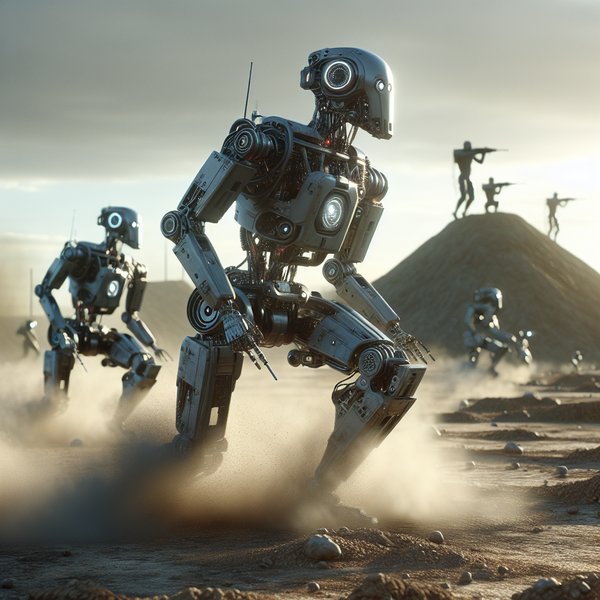
The integration of AI-powered robots into military operations has shifted from a concept to a tangible reality. In the ever-evolving landscape of warfare, sophisticated machines are being field-tested to mitigate human risks and enhance operational efficiency. This transition underscores the rapid infiltration of robotics and artificial intelligence from theoretical frameworks in laboratories to practical application on the battlefield.
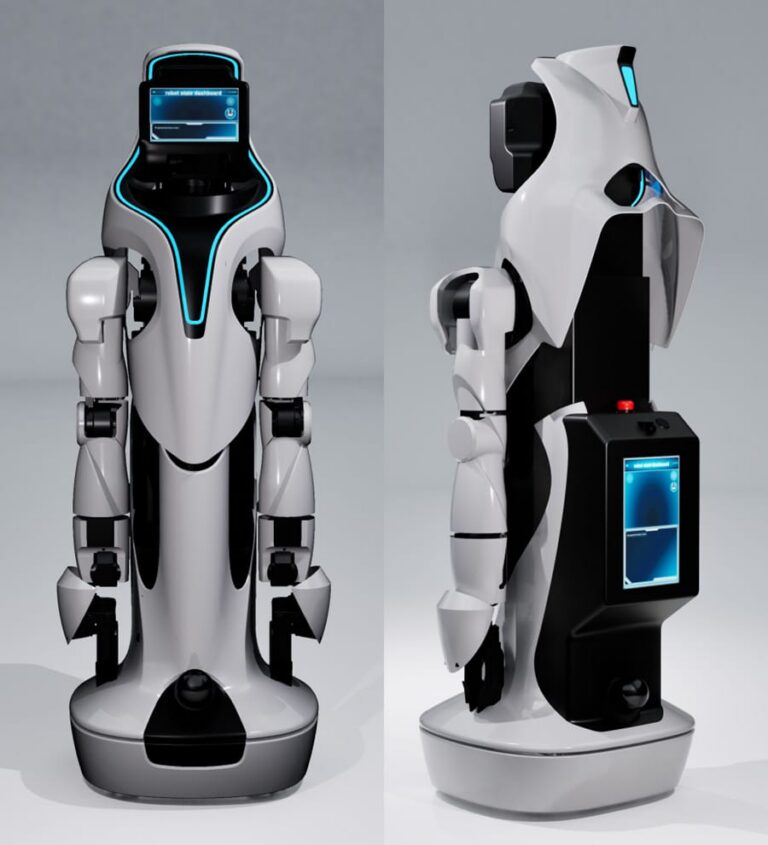
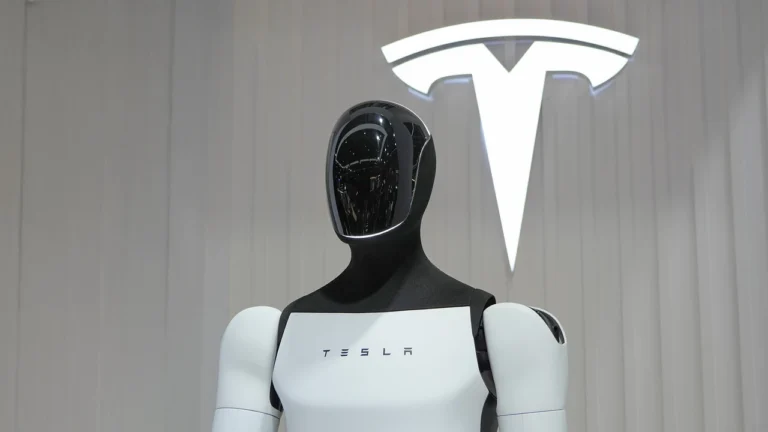
Among the cutting-edge advancements is the Phantom MK-1 humanoid robot, engineered to mimic human movement and operate adeptly in challenging terrains where traditional machinery faces limitations. Standing at approximately 175 cm tall and weighing 80 kg, the robot has a carrying capacity of up to 20 kg. Equipped with cameras and sensors, it comprehends its environment and can travel at speeds of up to 6 km/h. These robots are presently in the developmental phase, where their mobility, performance, and AI responsiveness are being rigorously assessed under various conditions.
Current military robots operate on a hybrid model that combines AI capabilities with human oversight, known as a “human-in-the-loop” system. AI aids in tasks such as object recognition, terrain navigation, and decision recommendations, while critical decisions, especially regarding weapon usage, remain under human control. While humanoid robots like the Phantom MK-1 capture attention, Uncrewed Ground Vehicles (UGVs) are already extensively deployed for logistical functions such as supply transport, casualty evacuation, and reconnaissance. Despite their increasing presence, most robots are primarily utilized for support roles rather than direct combat engagements.
However, challenges persist, including limited battery life, high production costs, and complexities in deciphering intricate scenarios. Furthermore, concerns about cybersecurity breaches and misuse of robotic systems loom large. Looking forward, experts anticipate a future battlefield where interconnected groups of robots collaborate across different domains of land, air, and sea. This transformative shift transcends warfare, representing a significant stride in the realm of robotics and AI, as machines progressively transition from mere tools to active collaborators in shaping technological evolution.
Developed by the San Francisco-based startup Foundation, the Phantom MK-1 is a product of collaboration between former military personnel and engineers specializing in defense robotics. The company has secured contracts exceeding $24 million with branches of the US Armed Forces, establishing itself as an official defense partner. Amidst a global surge in military robotics, nations such as the United States, China, Israel, and Russia are intensively engaged in the development and deployment of robotic systems. Notable instances include China’s testing of armed robot dogs and the US’s utilization of systems like PackBot and TALON in combat environments. Even countries like Estonia and Turkey are venturing into the construction of advanced unmanned ground and aerial combat systems, signaling a swift automation of future battlegrounds.
About the Author