Advances in Technology Leading to More Humanoid Robots
As technology progresses, the capabilities of humanoid robots are rapidly evolving. A recent demonstration video from Google’s DeepMind showcases a robot arm delicately folding origami, packing snacks, and manipulating objects with remarkable precision. The movements of this robot are not jerky and pre-programmed but rather fluid and adaptive, thanks to a new AI model called Gemini Robotics introduced by the company.
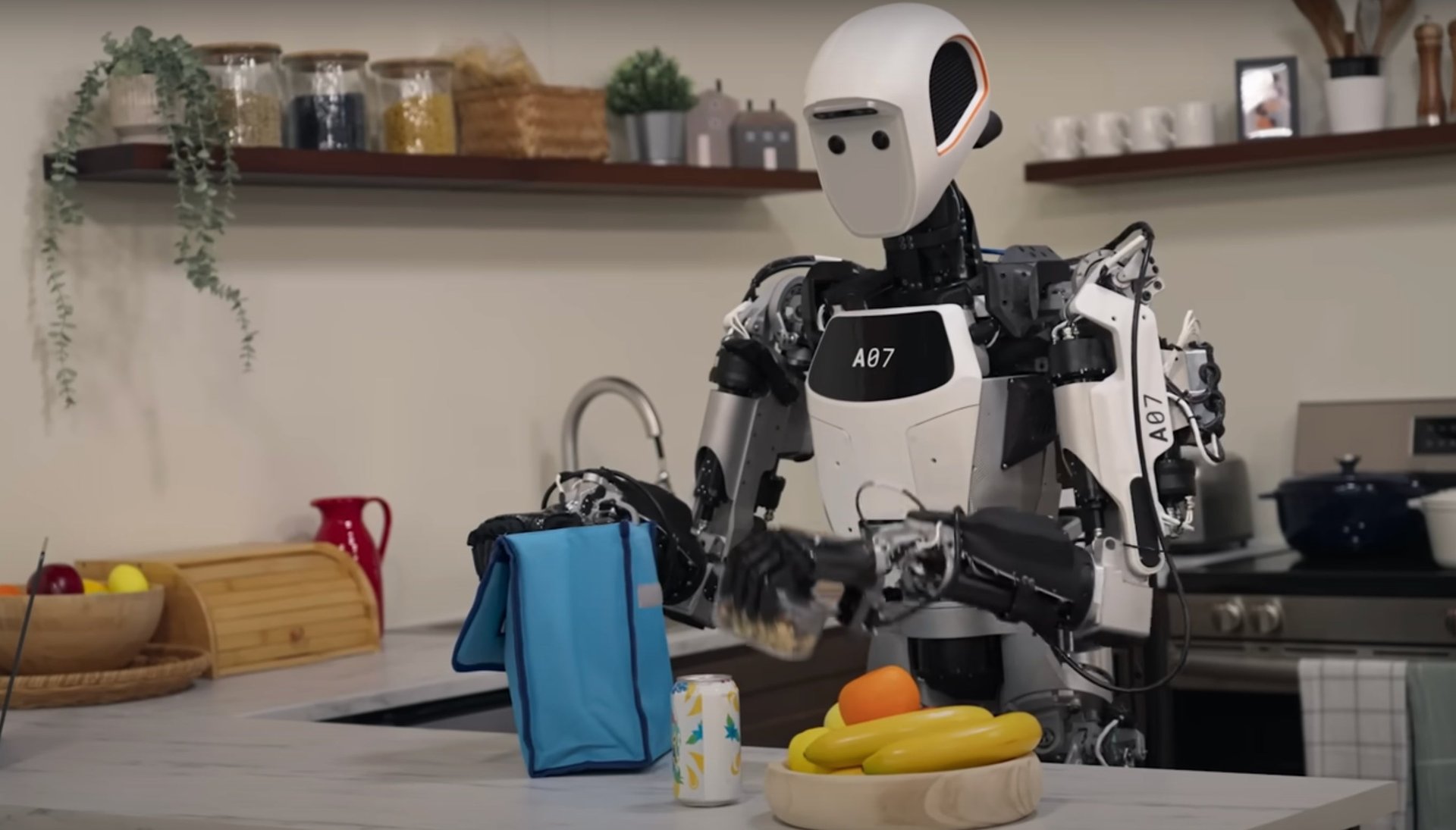
The underlying technology in these robotic arms will also drive the development of full humanoid robots. Google’s Gemini Robotics model is designed for versatility, enabling it to adapt to various types of robots. The model is already undergoing testing with Apptronik’s humanoid Apollo robot. According to Carolina Parada, leader of the DeepMind robotics team, for AI to be truly beneficial in the physical world, it needs to exhibit ’embodied’ reasoning akin to human understanding and interaction with the surrounding environment.
Tech giants such as Google and Meta, along with startups like Figure AI and Agility Robotics, are at the forefront of developing humanoid robots geared towards revolutionizing logistics and household tasks. These robots are envisioned to free individuals from monotonous chores and offer assistance in daily activities. The integration of advanced AI models into these mechanical workers allows for interactions through human speech, streamlining communication and operational efficiency.
Despite the progress made in humanoid robotics, a crucial question lingers: Should we adjust our environments to accommodate simpler machines or design robots tailored to our world? Proponents of humanoid robots advocate for designing machines resembling humans to seamlessly integrate into our existing spaces, justified by the fact that our environment is primarily structured for human interaction.
However, challenges persist in achieving widespread adoption of humanoid robots. Human-robot interaction research indicates that humans have a lower tolerance for robot errors compared to human errors. Issues such as handling delicate or changing objects and adapting to unpredictable household scenarios remain significant hurdles. Moreover, integrating large language models into robots introduces the risk of errors or misinterpretations that could result in dangerous situations.
Despite these challenges, significant investments are pouring into the development of humanoid robots by major tech players who remain steadfast in realizing the dream of a robot-assisted future. Efforts are underway to address barriers such as improving robot navigation in human spaces while ensuring safety and reliability. The vision of humanoid robots walking among us may soon transition from science fiction to reality, with industry experts projecting rapid advancements in the near future.
About the Author