Stay updated on the latest space news, rocket launches, skywatching events, and more by subscribing to our newsletter! Your sign-up was successful. If you’re interested in additional newsletters, we offer a variety of options to suit your preferences. The daily newsletter provides breaking space news and rocket launch updates regularly. For a monthly dose of entertainment, consider subscribing to “Watch This Space,” covering the latest sci-fi and space entertainment. If you enjoy skywatching, our weekly “Night Sky This Week” newsletter highlights must-see night sky events, moon phases, and stunning astrophotos. For sci-fi enthusiasts, our bi-monthly “Strange New Words” newsletter offers a sci-fi short story each month and a community of fellow fans.
Humans have been venturing into outer space since 1961, with plans now emerging to return to the moon, journey to Mars, and possibly beyond. At a recent Humans to Titan Summit in Colorado, experts discussed the prospects of sending astronauts to Saturn’s largest moon, Titan. Titan boasts a unique environment with a thick atmosphere, clouds, rain, and seas of hydrocarbons. The debate sparked at the summit centered on whether humans or AI-powered robots would undertake this ambitious voyage.
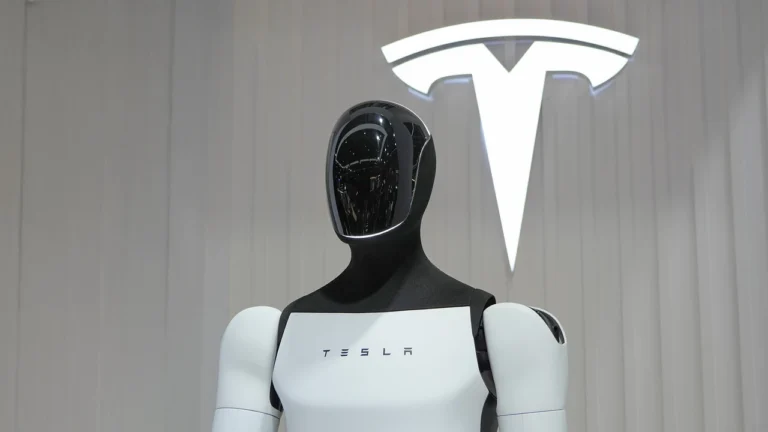
Pascal Lee, a planetary scientist and organizer of the summit, highlighted the evolving technology landscape, emphasizing the rapid advancements in AI and humanoid robotics. He suggested that while a human mission to Titan may be decades away, AI and robots are quickly advancing towards capabilities that rival human intelligence. Lee envisioned a future where android robots, equipped with AI, could autonomously explore space without the limitations inherent to human missions, making them ideal for interplanetary exploration.
Advancements in robotics, particularly in physical performance, are proving significant. Lee noted the competition between the US and China in developing humanoid robots capable of tasks that mimic human capabilities. He pointed to China’s UBTech Robotics and their Walker S2 robot as a prime example of the progress being made in robotics technology. Additionally, Lee proposed using analog research sites like the NASA Haughton-Mars Project to train humans and android robots to collaborate effectively in space missions.
Looking ahead, Lee envisioned a scenario where android-installed infrastructure on Titan could pave the way for human visits, with robots managing the facility autonomously. He suggested that Titan could serve as a crucial stepping stone before venturing into interstellar travel. Ultimately, the summit participants viewed Titan as a significant destination beyond Mars, representing a frontier where AI-driven exploration could redefine our understanding of space travel.
Leonard David, a renowned space journalist with over 50 years of experience in reporting on space activities, shared insights on the future of space exploration. With a wealth of expertise in space journalism and a multitude of publications on space exploration to his credit, David continues to inform and inspire readers about the fascinating world of space. Join us in exploring the wonders of space and staying tuned to the latest breakthroughs in space exploration.
About the Author