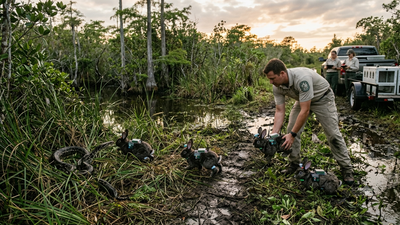
In a bid to combat the invasive Burmese pythons wreaking havoc in the Everglades, robotic rabbits that mimic the appearance and behavior of marsh rabbits have been deployed by the South Florida Water Management District. These robots are designed to entice the giant snakes out of their hiding places, a creative approach to address the python infestation that is devastating the native wildlife in the region.
Officials have expressed grave concerns over the impact of the Burmese pythons on the Everglades ecosystem, noting that these snakes have already wiped out 95% of small mammals and numerous bird species in Everglades National Park. Mike Kirkland, the lead invasive animal biologist for the water district, emphasized the challenges of detecting and capturing the well-camouflaged pythons, prompting the innovative use of robotic rabbits as bait.
Previously, live rabbits were utilized as lure for the snakes, but the method proved costly and labor-intensive, leading to the introduction of robotic rabbits. These artificial rabbits emit heat, a natural scent, and lifelike movements to simulate real prey, attracting the pythons. Solar-powered and remotely operated, these robots are strategically placed in monitored pens equipped with video cameras to alert authorities when a python is in the vicinity, enabling swift removal by designated contractors.
With each robot rabbit costing approximately $4,000 and financed by the water district, this initiative marks a concerted effort to tackle the python population, which has thrived in the warm, swampy environment of the Everglades. Favored for their ability to reproduce rapidly, a single female python can lay dozens of eggs, contributing to the challenge of controlling their numbers.
While estimates vary, these invasive pythons are believed to number in the tens of thousands to potentially 300,000 in Florida, posing a significant threat to the local biodiversity. In response, conservation efforts such as the annual “Florida Python Challenge” have been initiated to incentivize the removal of these snakes, with cash prizes awarded for capturing the most pythons.
Although the effectiveness of the robot rabbit project is still being evaluated, initial outcomes show promise, offering hope for the potential success of this innovative approach. As the endeavor progresses, officials remain optimistic about the project’s impact on curbing the python population and protecting Florida’s native wildlife. Ultimately, every python removed contributes to preserving the ecological balance of the Everglades and safeguarding its natural inhabitants.
About the Author