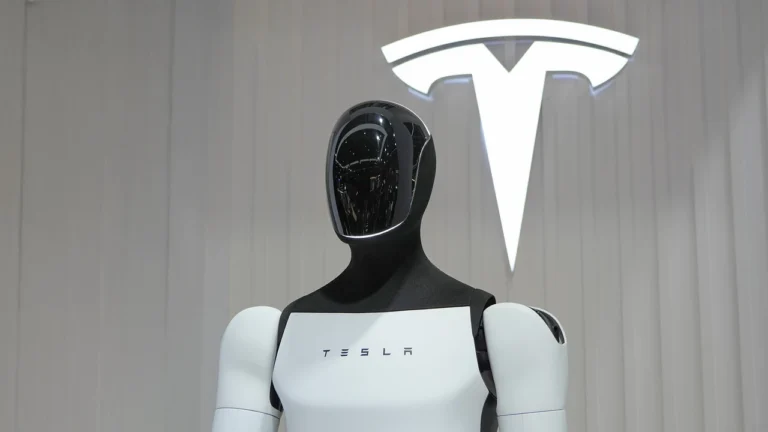
The Tesla Optimus robot, endorsed by Elon Musk, is anticipated to outperform its Chinese counterparts once it hits the market. However, other companies like Unitree have already made significant strides in the field of humanoid robotics. With over 5,500 humanoid robots sold in 2025, Unitree has surpassed the combined sales of all U.S. competitors, including big names like Tesla, Figure AI, and Agility Robotics. The company is now setting ambitious targets to ship up to 20,000 units in 2026 while transitioning from attention-grabbing demonstrations to developing practical household assistants.
Unitree’s focus has shifted towards creating a more consumer-oriented future for its robotic offerings. The company’s recent Shanghai Stock Exchange IPO filing aims to raise over $600 million to support the launch of a more affordable “general-purpose humanoid robot foundation model” by 2030. This model is built on four key pillars: scene comprehension, instruction interpretation, action execution, and task completion. It is designed to bridge the gap between cloud-based model training, on-device inference, and real-world data integration.
While existing humanoid robots like Optimus and Hyundai’s Atlas have predominantly been deployed in industrial and manufacturing settings due to their reliability under controlled conditions, Unitree is gearing up to introduce a versatile humanoid robot for everyday use within the next three years. As Unitree emphasizes the development of generalization, reliability, and safety features, the scope of applications is expected to broaden from industrial settings to household chores, elderly care, and daily activities such as laundry.
Unitree’s R1 robot has already demonstrated proficiency in simple household chores through voice- and vision-based interactions. Furthermore, its UnifoLM-VLA-0 model, available as open-source, enables the G1 humanoid to autonomously perform complex manipulations across 12 different categories using a single policy. This capability extends beyond mere memorization of predefined movements, allowing tasks like unpacking a tennis racket to be executed autonomously.
Industry experts highlight the significance of accumulating real-world interaction data to enhance the general intelligence of humanoid robots. This milestone is seen as pivotal in transitioning these robots from industrial settings to homes, making them more affordable and accessible to a broader consumer base. Amidst this rapid advancement in humanoid robotics, Unitree’s innovative products, like the Unitree Go2 robot dog quadruped, are now available for purchase on platforms like Amazon and IT Home.
About the Author