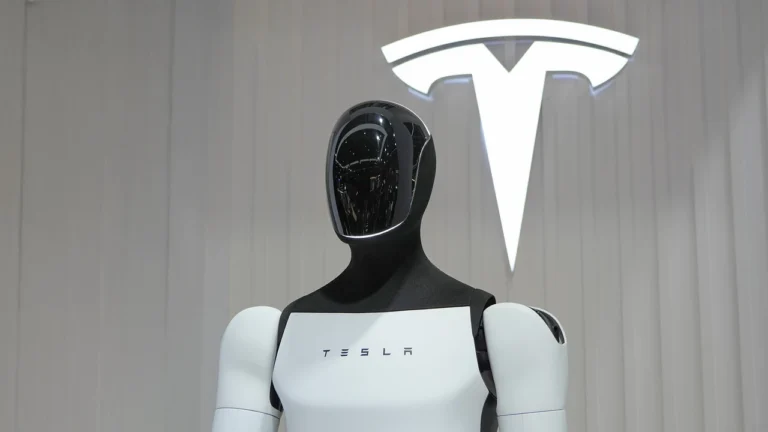
China is preparing to host a groundbreaking event in April that will bring together global participants in an unprecedented marathon. The event, organized by the Beijing Economic-Technological Development Area, will feature the world’s first marathon where both human and humanoid robot runners will compete, marking a significant milestone in the world of robotics.
Scheduled for April 13, the event will see humanoid robots joining around 12,000 human runners in a half-marathon. The robots, representing various companies, will have their lane for safety purposes. Li Quan, deputy head of the Beijing Economic-Technological Development Area, announced that there will be a cutoff time of about three and a half hours for the robots, with prizes awarded to the top three finishers among humans and robots.
The participating robots must have a human-like appearance and mechanical structures enabling them to walk or run on two legs, with wheeled robots excluded. Both remote-controlled and fully autonomous robots are eligible to take part in the marathon. The competition includes categories such as race completion, best endurance, and most popular robot, with performance evaluations based on finishing time and the number of robot changes during the race, each resulting in a 10-minute penalty.
The objective of this event is not only to highlight the advancements in the humanoid robotics industry but also to stimulate discussions and enhance the public’s comprehension of robot capabilities, ultimately propelling industry growth. Robotics companies, research institutions, robot clubs, and universities worldwide are encouraged to participate in the marathon, with registration open from Wednesday to March 11. The event aims to showcase Beijing’s rapid technological innovation, particularly in fields like artificial intelligence and human-machine interaction.
Moreover, the Beijing Economic-Technological Development Area recently revealed plans to recruit up to 10,000 robots from robotics companies within the next two years, with over 1,000 roles designated for humanoid robots. The region is transitioning into an artificial intelligence hub and is creating opportunities for robots in various sectors, including advanced manufacturing, education, healthcare, and municipal management.
In collaboration with companies such as JD, Xiaomi Automotive, and Bayer, pilot projects are underway to integrate robots into manufacturing processes for tasks like material handling, quality inspection, and packaging, with an anticipated deployment of more than 5,000 units by the end of next year. Additionally, humanoid robots will be deployed in hazardous environments like factories, mines, and power plants to improve working conditions and enhance overall efficiency in those settings.
About the Author