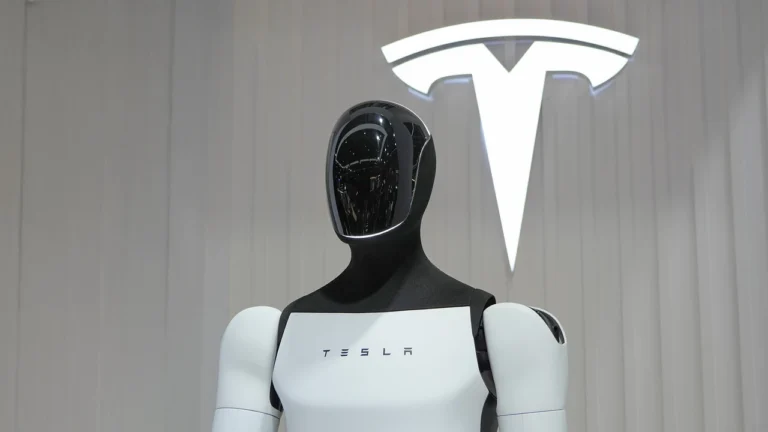
In the realm of social media, there’s a recent development worth noting: the emergence of a new humanoid robot named Phoenix, created by the Canadian company Sanctuary AI. Phoenix represents the sixth generation of General Purpose Robots (GPR) by Sanctuary AI, equipped with the Carbon control system that endows it with human-like intelligence. This advanced robot is capable of performing a wide range of tasks across various industries, owing to its unique design and functionality.
Standing at 170 cm tall and weighing 70 kg, Phoenix closely resembles the size of an average adult. While its current strength limits it to lifting 25 kg and moving at a pedestrian speed of 5 km/h, Phoenix boasts revolutionary robotic arms with enhanced dexterity, rivaling the agility of human hands. Additionally, it features haptic technology that simulates the sense of touch, offering a more immersive experience.
The operation of this android is facilitated by the cognitive architecture of Carbon, a versatile platform for general-purpose robots. By integrating cutting-edge artificial intelligence technologies, Carbon enables Phoenix to interpret natural language commands and execute tasks with human-like efficiency. Utilizing symbolic and logical reasoning in conjunction with modern Language Model models, like those in ChatGPT, Carbon ensures that Phoenix can think and act intelligently to tackle diverse challenges.
Sanctuary AI recently conducted a week-long pilot test of Phoenix in a Canadian Tire Corporation store, during which the robot successfully completed 110 retail-related tasks, including picking, packing, cleaning, labeling, and stocking shelves. While Phoenix’s motions are currently guided by an experienced operator, researchers aim to enable the robot to autonomously learn new skills in the future.
The advent of such advanced robotics technology underscores the potential for AI-powered automation to revolutionize various industries. As the field continues to evolve, collaborations between human intellect and artificial intelligence, as demonstrated by Phoenix, are poised to redefine the future of work and productivity.
About the Author