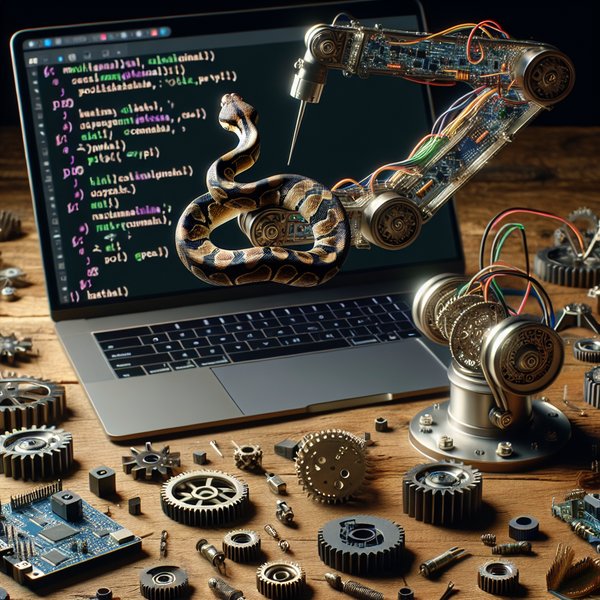
Are you interested in the field of robotics and looking to enhance your skills? Python is a widely used and versatile language in the realm of robotics, playing a crucial role in designing embedded systems for industrial robots. The key component that elevates Python in the robotics domain is its Robot Operating System (ROS), simplifying the development process for programmers.
Python offers various strengths for robot programming, particularly when paired with platforms like Raspberry Pi and Arduino, making robotic engineering more accessible. Understanding Python is essential for aspiring robotics professionals due to its user-friendly nature and its versatility in handling complex machine code and low-level hardware requirements.
The appeal of Python lies not only in its popularity but also in its adaptability across different applications and operating systems. Its simplicity and coding speed outshine other languages such as C++ and JavaScript. Python is widely used for various applications beyond robotics, including website scripting, prototype development, image processing, and scientific data analysis, making it a favorite among developers and data scientists.
The efficiency and effectiveness of Python in robotics programming stem from its ability to teach, automate, and process robot programs seamlessly. With Python, professionals can easily write scripts to record, calculate, and simulate robot programs without the need for extensive manual programming. Compared to Java, C++, and C, Python requires fewer lines of code for programming, making it a preferred choice for embedded systems design.
To become proficient in Python for robotics, there are various learning options available, ranging from coding bootcamps and online courses to traditional college programs. The choice of learning method depends on individual preferences, prior experience, and the desired pace of learning. Python is not only valuable in robotics but also serves as a gateway to the machine learning industry, with the continuous advancement of technology.
Python’s extensibility and portability enable seamless integration with various platforms and languages, enhancing its usability in the robotics field. With over 137,000 libraries available for different purposes, Python simplifies the coding process and accelerates project development. Structured learning programs and clear learning goals are essential in mastering Python for robotics, along with hands-on practice and involvement in structured projects.
In a nutshell, Python is a versatile and essential programming language in robotics, offering a myriad of benefits for professionals in the field. Its accessibility, efficiency, and extensive library support make it a top choice for robotics programming. Embracing Python for robotics opens up opportunities in machine learning and artificial intelligence, paving the way for innovative developments in the tech space.
About the Author