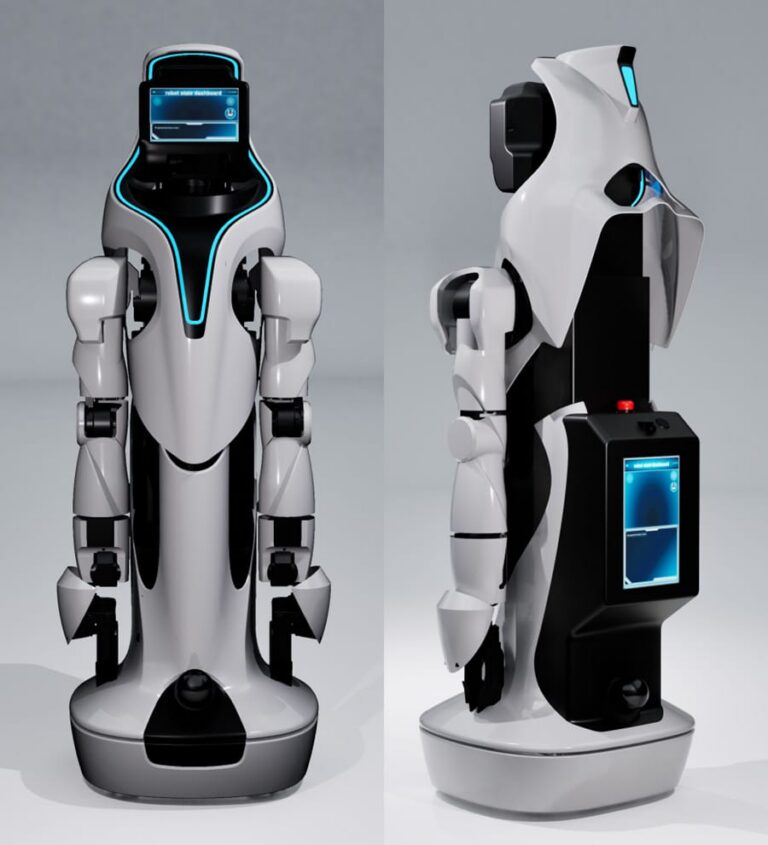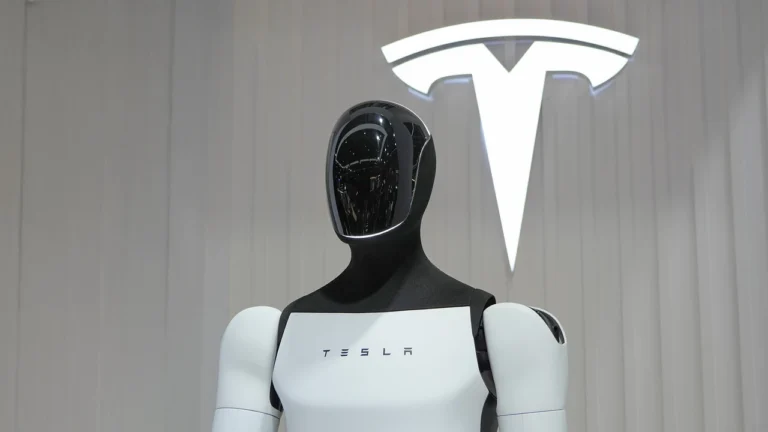
Nvidia CEO Jensen Huang recently emphasized the significance of robotics alongside artificial intelligence as a key market for the chipmaker’s future growth. He mentioned that self-driving cars would be one of the initial major commercial applications of this technology. During Nvidia’s annual shareholders meeting, Huang highlighted the substantial growth opportunities within the company, particularly in AI and robotics, stating that they represent a multitrillion-dollar potential.
About a year ago, Nvidia decided to combine its automotive and robotics divisions under the same line item in its financial reports. The company announced that the business unit generated $567 million in quarterly sales, accounting for approximately 1% of its total revenue, with a remarkable 72% annual increase in the automotive and robotics sector. Nvidia has experienced significant sales growth in recent years, primarily driven by the increasing demand for its data center GPUs used in advanced AI applications like OpenAI’s ChatGPT. The company’s total sales have surged from around $27 billion in fiscal year 2023 to $130.5 billion last year, and analysts are projecting nearly $200 billion in sales for the current year.
Nvidia’s stock reached a record high, propelling the company’s market cap to approximately $3.75 trillion, positioning it slightly ahead of Microsoft as the world’s most valuable company. While robotics currently represents a smaller portion of Nvidia’s business, Huang emphasized that future applications would require the company’s advanced AI chips for training software, as well as other chips integrated into self-driving cars and robots. Nvidia’s Drive platform of chips and software for autonomous vehicles, including its collaboration with Mercedes-Benz, were also highlighted by Huang, who mentioned the release of AI models for humanoid robots named Cosmos.
Nvidia has expanded its offerings beyond just AI chips by including software, cloud services, and networking chips to enhance AI accelerators. Huang articulated that Nvidia’s identity has evolved beyond a mere chip company, now positioning itself as an “AI infrastructure” or a “computing platform” provider. At the shareholders meeting, approval was granted for the company’s executive compensation plan, and all 13 board members were reelected. Proposals from outside shareholders for a more comprehensive diversity report and modifications to the shareholder meeting procedure did not pass.
In its pursuit of innovation and growth, Nvidia envisions a future where billions of robots, hundreds of millions of autonomous vehicles, and numerous robotic factories will be powered by Nvidia technology. Huang’s forward-looking vision underscores the company’s commitment to advancing AI and robotics industries.
About the Author