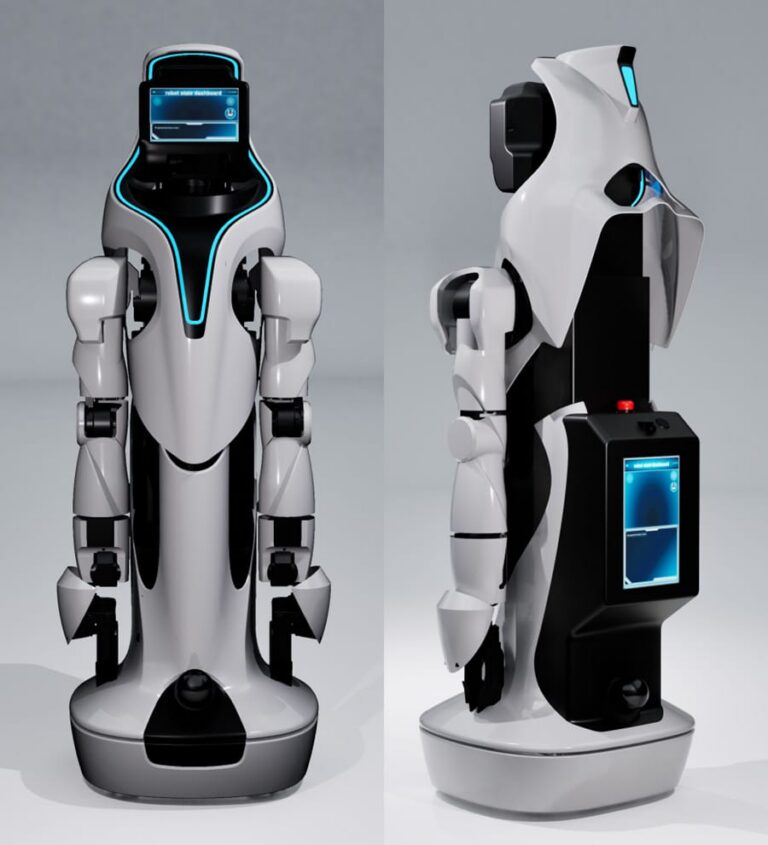
Bipedal locomotion poses a significant challenge in the field of robotics, especially for robots like Bolt, which are designed with a point-foot structure. This research delves into the control mechanisms of such underactuated robots using constrained reinforcement learning to tackle their inherent instability, absence of arms, and limited foot control. The study introduces a novel approach that utilizes Constraints-as-Terminations and domain randomization techniques to facilitate the transfer of skills from simulation to real-world applications.
Through a series of both qualitative and quantitative experiments, the effectiveness of the proposed methodology is assessed in terms of maintaining balance, controlling velocity, and responding to external disturbances such as slips and pushes. Furthermore, the research evaluates the autonomy of the robots by analyzing metrics like the cost of transport and ground reaction force. By enhancing robust control strategies tailored for point-foot bipedal robots, this method offers valuable insights that can be applied to advance locomotion capabilities in a broader sense.
For more information, please visit: https://hal.science/hal-05198560. Submitted on: Monday, August 4, 2025, 11:05:50. Last modified on: Saturday, December 20, 2025, 03:07:45. Contact Resources Information Legal Inquiries Portals CCSD.
About the Author