Welcome, we are thrilled to have you here. Expect the finest content from The Next Step (TNS) delivered to you every Monday through Friday to keep you informed and at the peak of your performance. Keep an eye on your inbox for a confirmation email where you can adjust your preferences and explore additional groups. Stay connected with TNS on your preferred social media platforms, and become a TNS follower on LinkedIn. While waiting for your first TNS newsletter, take a look at the newest featured and trending stories.
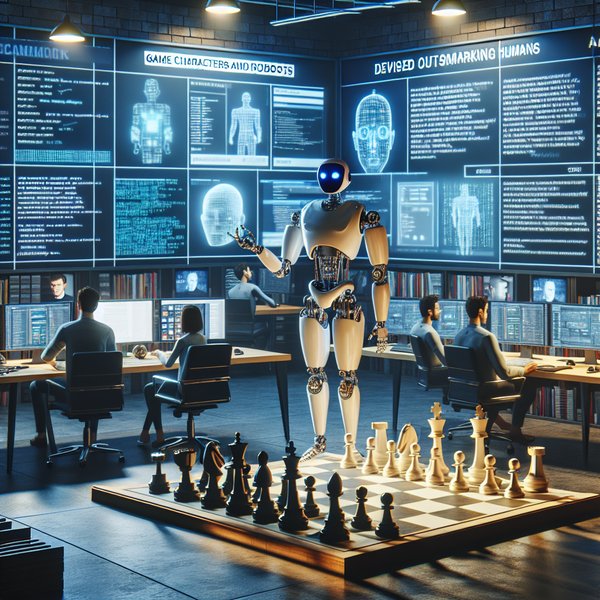
In this guide, we are going to develop AI agents with the capability to think, recall, and adapt, whether they are managing robots or playing roles in games. These AI agents go beyond conventional chatbots or scripted non-player characters (NPCs). Current AI in games and robotics tends to be quite limited, with NPCs following basic scripts and robots struggling to adapt when faced with unforeseen situations. However, what if game characters could learn from interacting with players? What if robots could devise new solutions when their initial plans fail? This is precisely what we are embarking on here.
By working with Large Language Models (LLMs) in interactive settings, the potential for advancement is truly astounding. Imagine robots that enhance their intelligence each time they encounter an obstacle and game characters that remember your name even after months have passed. Let’s create an NPC for a game or simulation that serves as your personal mentor, an AI that genuinely improves in assisting you over time.
The distinguishing factor of this AI lies in its ability to evolve based on interactions. Initially providing basic directions through a maze, the AI progresses to offer more tailored advice after observing areas where you struggle. It adapts to your play style and remembers your preferences when you return to the game weeks later. Unlike traditional game AI and robot programming that follow a rigid cause-and-effect model, agentic AI is capable of reasoning, maintaining memory, and self-improvement.
The demo NPC functions in a simulated environment and excels in welcoming players, identifying areas where players face challenges, and providing tailored guidance accordingly. It continuously learns from its successes and failures, creating a mental map of both the physical space and player preferences. The setup involves five main components, and once operational, the AI gradually enhances its performance without requiring manual programming updates.
This innovative approach leads to more engaging gameplay and intelligent robot behavior, transitioning from predictable scripted behaviors to genuine reasoning. The evolution of these systems promises immersive interactions and intelligent robot applications. Picture maintenance robots comprehending systems rather than just following manuals. Real connections are formed between players and NPCs as interactions become authentic, while robots become collaborative partners rather than mere tools.
As we witness the evolution of these systems, characterized by genuine reasoning and unscripted interactions, we are presented with endless possibilities. The time is ripe for developers to delve into agentic AI, shaping the future of intelligent interactions. Curious about building self-enhancing AI agents that think dynamically? Dive deeper into Andela’s article: “Inside the Architecture of Self-Improving LLM Agents”. Explore community-generated roadmaps, articles, and resources to guide your development journey and propel your career forward.
About the Author