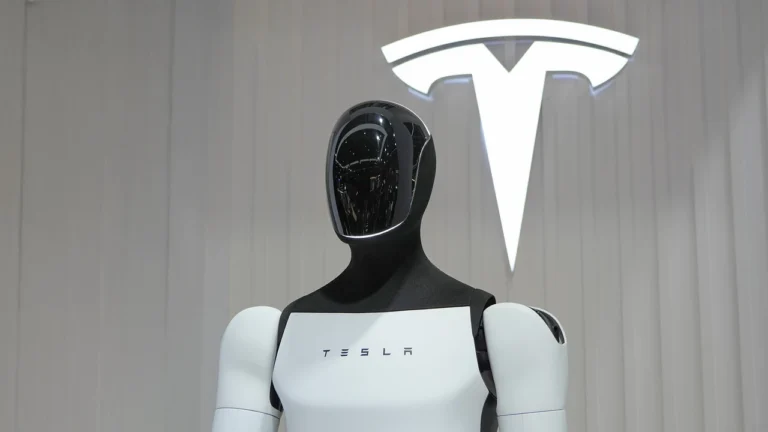
Tesla is ramping up production of its humanoid robots, Optimus, but is facing a challenging issue: manufacturing hands that are precise, durable, and easy to assemble on a large scale. The company reportedly produced several hundred units per week last month, up from just a few dozen recorded a few months earlier, yet still far from the announced goal of about 20,000 robots per week.
According to reports by The Information, some equipment in the assembly line struggles to consistently align parts with the necessary precision, affecting components such as hands and joints. This leads to an increase in the number of robots requiring corrections after leaving the production line. In a complex machine like this, minor assembly errors can cause significant delays.
The complexity of producing hands poses a particular challenge. Each hand and forearm contain over 100 screws and other small parts, many of which still need to be manually installed. Besides assembly complexity, concerns also exist regarding the hands’ durability for extended use. Some tactile sensors have also reportedly faced reliability issues.
To address potential sensor failures without replacing the entire hand, Tesla has developed a replaceable sensory glove that consolidates the tactile sensors and can be changed independently. This solution is expected to be integrated into a future version of Optimus, aiming to simplify maintenance and reduce downtime for each robot significantly.
Apart from hardware production challenges, Optimus still grapples with performing different tasks without specific training for each. Basic operations reportedly may require several days of programming and learning. This indicates that the robot is still far from functioning as a truly autonomous and universal assistant.
For now, Tesla primarily uses most internally produced units for testing, data collection, and AI system training. The robots operate in controlled areas within factories, allowing close monitoring of movements and tasks to identify potential failures before deploying Optimus to customers. Elon Musk envisions Optimus as one of Tesla’s critical products, foreseeing applications in factories, warehouses, and potentially household tasks in the future.
Tesla aims to begin selling or providing robots to commercial customers by the end of 2027. Initially, the focus may be on leasing rather than direct sales to enable Tesla to monitor robots on-site, gather data, and improve AI systems based on real work scenarios. The company has cleared space for Optimus production at its Fremont factory in California after reducing production of Model S and Model X.
However, transitioning from producing a few hundred units per week to 20,000 will require more than just increasing the workforce or assembly stations. Tesla must address line accuracy, component durability, and robot training capabilities. While Optimus has the potential to revolutionize repetitive tasks in factories and warehouses, bridging the gap between an impressive prototype and a reliable daily-use product remains a considerable challenge.
About the Author