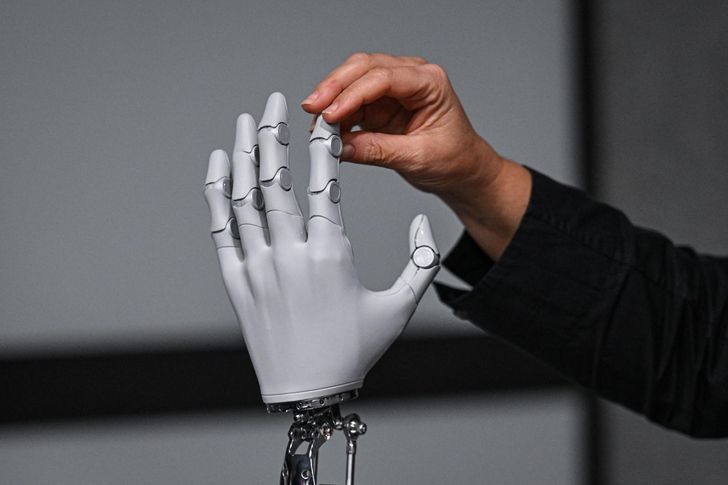
In Guangzhou, southern China’s Guangdong province, a journalist had a firsthand experience with XPeng’s cutting-edge Iron humanoid robotic hand. Developed by Enactic, a Tokyo-based company, these human-like robotic arms are designed for physical artificial intelligence research. Operating in tandem with a VR headset user, the robotic arms mimic intricate hand movements with precision. Enactic envisions these advanced robotics as capable of independently performing daily household chores, such as dishwashing and laundry, particularly in short-staffed Japanese care facilities.
As artificial intelligence evolves, we are witnessing its integration into physical forms such as smart robots, self-driving vehicles, and other autonomous machines. Jensen Huang, the head of U.S. chip giant Nvidia, describes this as the dawn of physical AI – technology that comprehends the principles of physics and interacts seamlessly with humans while understanding the intricacies of the world around them. Consequently, significant investments are being channeled into physical AI projects, with projections indicating a potential presence of over a billion humanoid robots globally by 2050.
The advent of advanced androids, often originating from China, showcases remarkable capabilities like dancing to music and effortlessly handling heavy items. Despite the allure of a futuristic world with robotic assistants, concerns loom regarding job displacement, privacy infringement, and the timeline for these innovations to become practical realities. Hiro Yamamoto, CEO of Enactic, aims to introduce new robots developed to coexist harmoniously with individuals in dynamic and unpredictable environments like care facilities, emphasizing the importance of safety and user-friendly design.
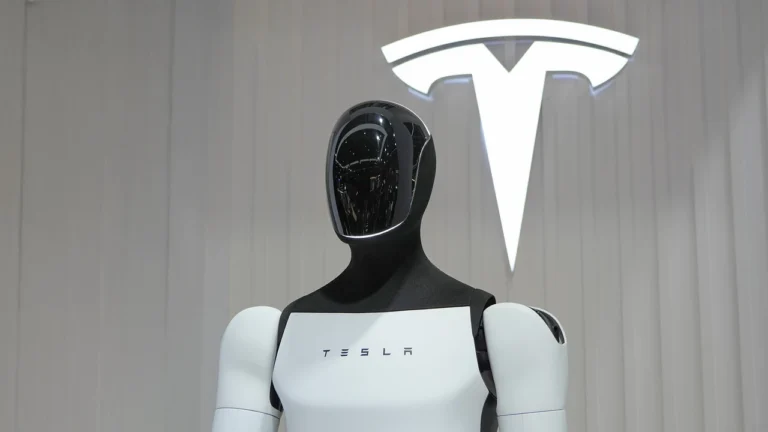
In Guangzhou, XPeng, a Chinese electric vehicle manufacturer, revealed its latest creation – a humanoid robot capable of independent movement and even dancing. While U.S. companies like Boston Dynamics have showcased agile robotic designs, strong government support and robust supply chains in China have propelled local companies like Unitree Robotics and EngineAI to the forefront of physical AI development.
XPeng’s CEO envisions a future where robots could potentially outpace car sales, indicating a significant shift in consumer behavior. These robots exhibit autonomous functionality, including walking and dancing, with a focus on handling objects being a key area for improvement. Despite their remarkable capabilities, the cost-effectiveness and practicality of replacing human workers with AI in tasks requiring dexterity remains a subject of debate.
The advancement of physical AI requires extensive data and training, especially in tasks involving vision and spatial awareness. Enactic and other innovators are deploying teleoperated robots in real-world settings to acquire invaluable on-the-job experience. Through this process, physical AI models can gradually learn to operate autonomously, paving the way for a future where humanoid robots can fulfill various roles previously exclusive to humans.
While technological progress in physical AI is evident, challenges persist in bridging the gap between sophisticated AI systems and physical abilities. A notable example is the Russian humanoid robot that stumbled and fell during its inaugural appearance, underscoring the importance of aligning AI capabilities with physical performance. Despite the rapid advancements and substantial investments in AI, concerns regarding the impact on human employment persist, prompting a reflection on the indispensable role of human touch and adaptability in an increasingly automated world.
About the Author