Welcome! We are thrilled to have you join us. Receive the latest TNS content Monday through Friday to stay informed and ahead in your field. Upon signing up, please check your inbox for a confirmation email. Here, you can customize your preferences and even explore additional groups. Connect with TNS on your preferred social media platforms and consider following TNS on LinkedIn. While waiting for your first TNS newsletter, take a moment to explore the featured and trending stories.
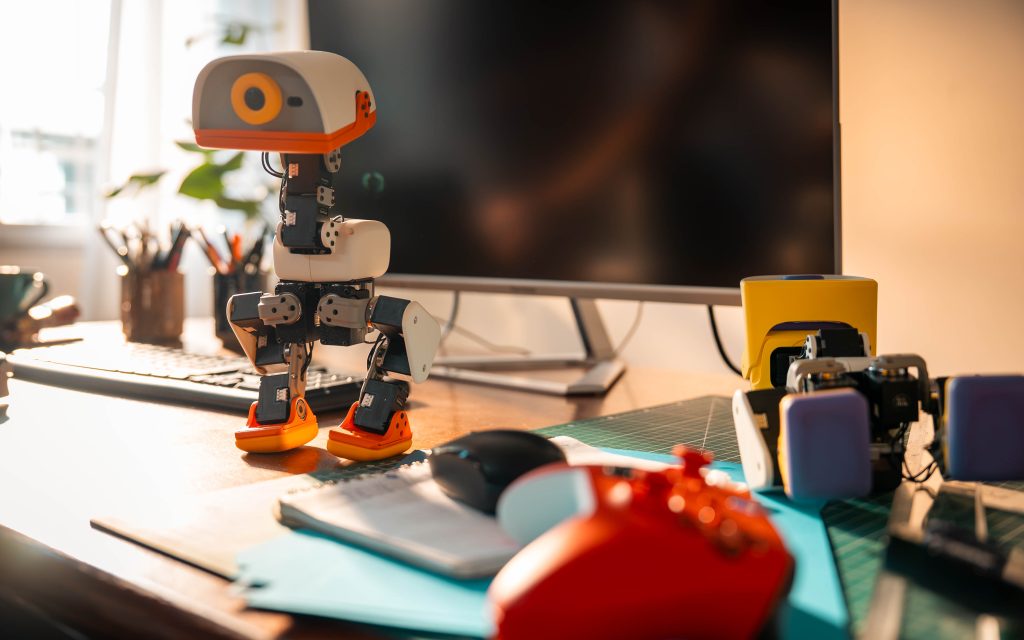
Exciting news! Hugging Face’s Pollen Robotics has introduced the Microduck, a bipedal duck-like robot that can walk, waddle, and even use roller-skates, complete with a beak for object manipulation. Priced at $399 during the introductory phase, this robot is designed to be interactive and engaging. Scheduled for delivery before Christmas in North America and Europe, the Microduck follows the successful desktop robot Reachy Mini. Unlike its predecessor, Microduck emphasizes action and physical movement, making it an ideal tool for developers interested in training physical behaviors and experimenting with AI in the real world.
The Microduck is more than just a toy; it is an open-source platform equipped with an SDK, virtual training environment, and reinforcement learning scripts to assist developers in training the robot for various tasks. The platform also includes a physics simulator for those who wish to delve deeper into teaching the robot new behaviors. With the capability to control the robot remotely using a game controller, developers have the option to train the robot across multiple virtual ducks simultaneously.
This innovative robot is powered by a Rockchip RK3566 with an AI accelerator, offering 1GB of onboard memory and 32GB of storage. Equipped with sensors like a front camera, LiDAR sensor, and inertial measurement units, the Microduck can perceive and interact with its surroundings. Additionally, accessories such as a Charger Pack and Dev Pack are available for purchase, enhancing the robot’s functionality.
Furthermore, each Microduck generates a unique signature sound upon activation, adding a personalized touch to its character. Though it communicates through sounds rather than speech, multiple Microducks interacting together create an engaging and lively experience. As a developer, this opens opportunities to explore multi-robot behaviors without the need for costly hardware.
In a world that can sometimes feel overwhelming, projects like the Microduck provide a refreshing break. It is both a fun and innovative endeavor that offers developers a unique platform for growth and exploration. Join our community to access roadmaps, articles, resources, and developer journeys aimed at assisting you in advancing in your career path.
About the Author