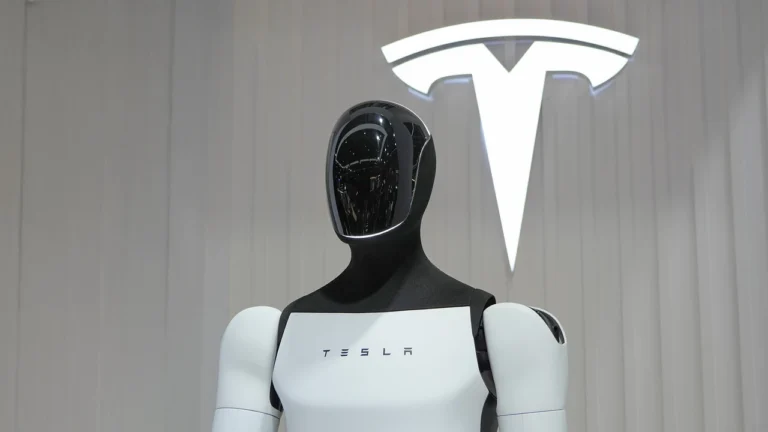
In mid-2026, Tesla’s Optimus program has around 1,000 to 1,200 humanoid robot units operational in Fremont and Giga Texas. However, despite the scale of deployment, Tesla has not reported any external sales, disclosed uptime figures, or provided specific details on their performance. Elon Musk mentioned during a Q4 2025 earnings call that the robots are primarily utilized for learning and data collection rather than executing productive tasks. The Fremont Model S/X line was transitioned to Optimus assembly in mid-2026, with initial units allocated for internal training purposes rather than being distributed to commercial customers. The conversion process from Model S/X production to Optimus assembly took approximately four months, leading to the halt of Model S/X production at the Fremont facility in early May 2026.
At the Q2 2026 earnings call on August 5, 2026, Musk announced that production would commence imminently, with a target start date set for late July or August 2026. Early builds from Fremont are directed to the Optimus Academy, an internal program designed to teach robots basic factory skills before they progress to more functional tasks. Despite Tesla’s ambitious plans, the production ramp faces challenges due to constraints in the supply chain. China’s imposition of export controls on crucial rare earth elements since April 2025, such as terbium and dysprosium used in NdFeB servo magnets, has impacted Tesla’s operations. The situation is further complicated by China’s dominance in global permanent magnet production, with control over 94% of sintered permanent magnet manufacturing.
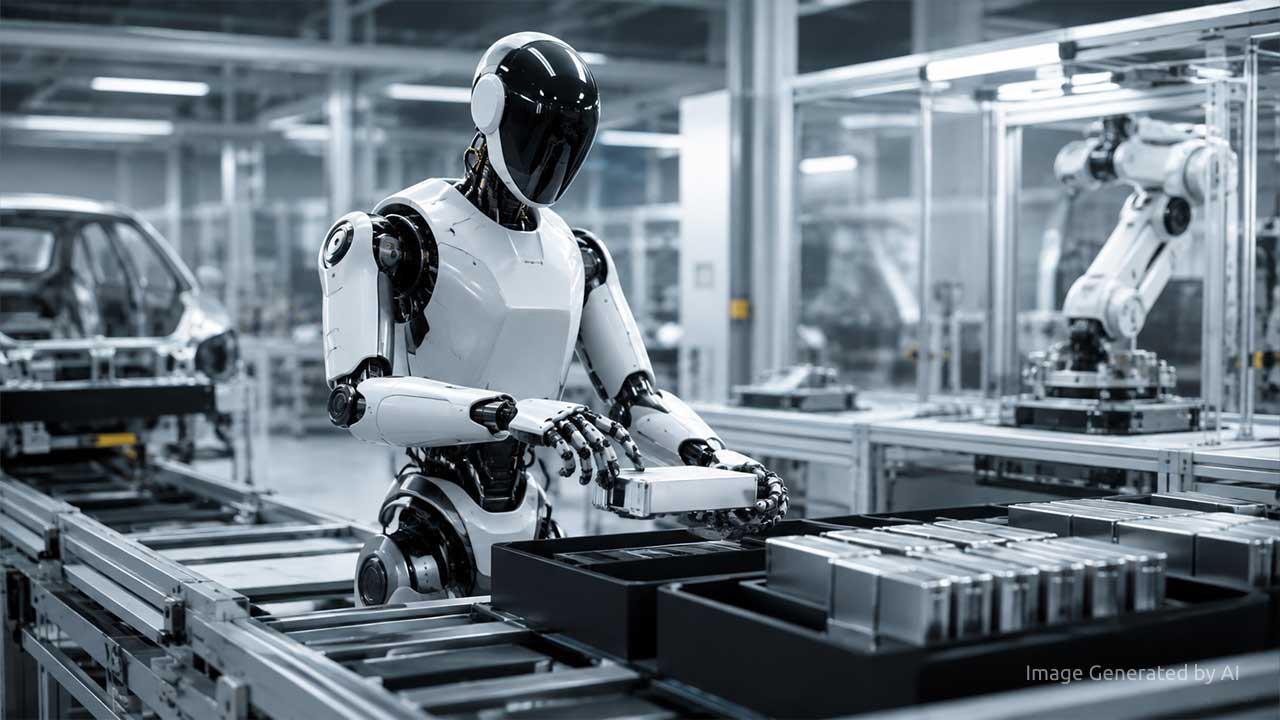
The Optimus robots are reported to handle various tasks including battery cell sorting, parts handling, kitting, quality inspection, and pick-and-place functions. However, Tesla has not made public any data regarding throughput or error rates for these tasks. Musk has acknowledged the complexity of scaling Optimus manufacturing, given the extensive number of unique components comprising each robot. He emphasized the challenges in synchronizing the production process due to the interdependence of all the components.
Comparatively, other companies like Figure AI and Agility Robotics have shown tangible progress with paying external customers and documented operating hours. Figure AI’s deployment at BMW Spartanburg operates efficiently, loading sheet-metal parts with high accuracy and productivity levels. Agility Robotics has established a robust production capacity for its RoboFab facility, projecting annual output for Digit units. The current manufacturing cost for Optimus units is estimated to range between $50,000 and $100,000 per unit, with potential risks related to rare earth supply and chip integration delaying progress.
Looking ahead, Tesla aims for a consumer target price below $20,000 for the humanoid robots, with a long-term mass-production goal between $20,000 and $30,000 per unit. Industry projections foresee a significant growth in the humanoid robot market, with estimates indicating substantial market potential by 2035. However, industry experts predict that achieving meaningful external revenue from the Optimus program may be delayed until late 2027. The integration of the AI5 chip into Optimus units is anticipated around mid-2027, adding another dimension to the technological advancements within the program.
In conclusion, while Tesla’s Optimus program represents a significant step forward in robotics and automation, the company faces challenges in production scalability, material supply, and technology integration. The progression of Optimus manufacturing and deployment will be closely monitored as the industry navigates the complexities of advanced robotics technologies.
About the Author