Title: Emerging Trends in Embodied Intelligence: The Story of LatentVerse
Cheng Zi wrote an article on August 18, 2026, shedding light on the burgeoning sector of embodied intelligence. Hu Yucheng, a young researcher, founded LatentVerse, distinguishing his company from the saturated market of world model startups. Yucheng Hu, the founder, emphasized the uniqueness of LatentVerse and its pursuit of embodied-native foundation models over conventional world models. Despite being a doctoral student at Tsinghua University, he took a leap of faith and co-founded LatentVerse with members from prestigious organizations like ByteDance, Xiaomi, and more.
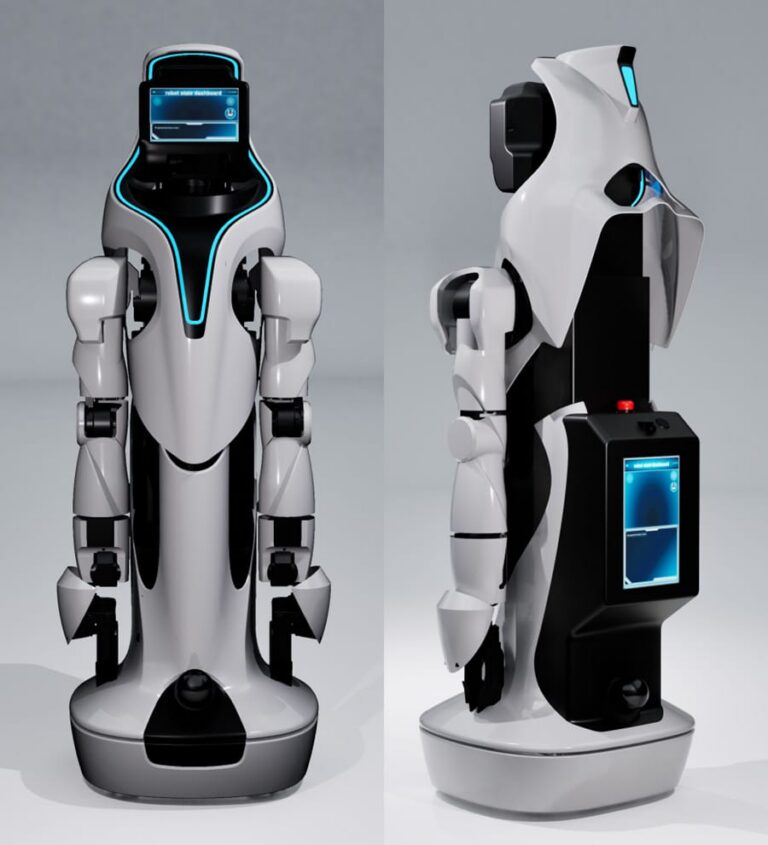
Embodied intelligence, with a focus on vision-language-action (VLA) systems, has gained traction in the past few years. From RT-2 to Pi-0.5, the evolution has been directed towards training models to act in the physical world based on vision-language cues. Nevertheless, challenges persist, such as high data acquisition costs and limited general-purpose capabilities. LatentVerse has charted a unique path by combining VLMs and world models in their architecture.
The company’s vision encompasses training models like UTAM (Unified Tactile Action Model) that can interpret visual, language, and tactile signals simultaneously. This multi-module approach involves experts in vision-language interpretation, world modeling, action generation, and precise tactile control. UTAM aims to enhance robots’ general-purpose capabilities for tasks like cleaning hotel rooms, packing beverages, and handling delicate objects in homes.
LatentVerse’s innovative strategy integrates various data sources, including teleoperation data, human hand data, and open-source videos, to enrich training datasets. Their vision for an embodied-native model emphasizes the need for robustness and adaptability in real-world applications. Hu envisions a future where robots can perform complex tasks in diverse environments with cognitive and contact intelligence seamlessly integrated.
The company is investing in developing a robust data pipeline, leveraging its expertise in embodied models and simulation to train its models effectively. With a plan to release a 16-billion-parameter embodied foundation model and accumulate extensive training data, LatentVerse aims to improve generalization and address a wide range of industrial, commercial, and household scenarios. The goal is to usher in a new era of robotics that can operate efficiently in unstructured environments, bridging the gap between cognition and physical interaction.
In conclusion, LatentVerse’s pioneering work in embodied intelligence signifies a paradigm shift in robotics. By pushing the boundaries of model training and data utilization, the company aims to accelerate the development of robots capable of navigating complex real-world challenges. Hu’s holistic view of world models envisions a future where robots seamlessly blend cognitive understanding with tactile interactions to unlock their full potential in diverse environments.
About the Author