Robotic technology is advancing rapidly across industries traditionally reliant on manual labor. While robotic arms have long been used in automotive welding, newer automation technologies are now entering labor-intensive sectors such as apparel, logistics, and industrial security. One of the key players driving this transformation is Jack Technology, a leading global manufacturer of industrial sewing machines. By integrating artificial intelligence and humanoid robotics, Jack Technology aims to increase operational efficiency by at least 30 percent.
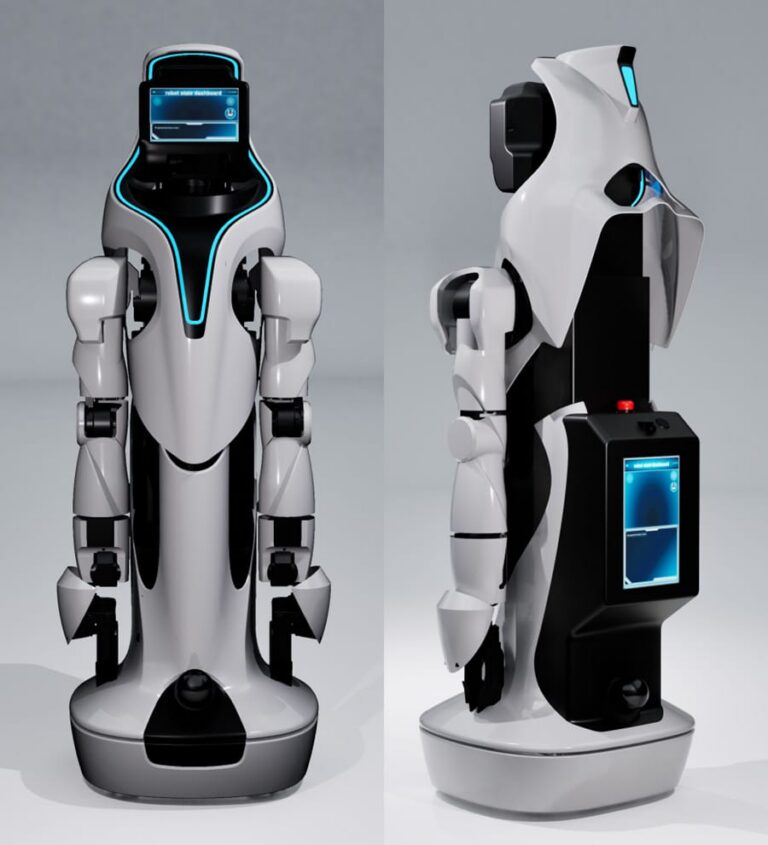
Jack Technology has partnered with Siemens to implement software solutions ranging from design and simulation to platform development. This collaboration has resulted in the creation of 2,000 humanoid robots specifically tailored for apparel manufacturing, marking a significant milestone in the industry’s adoption of humanoid technology in human-centric workspaces. These robots have been seamlessly integrated into existing facilities without the need for costly modifications, showcasing their versatility and adaptability.
Siemens highlights the success of humanoid robots and quadrupeds in various operational environments. In a recent trial at Siemens’ electronics plant in Erlangen, a wheeled humanoid robot from a British startup demonstrated its capability by autonomously handling warehouse crates, moving 60 crates per hour across eight-hour shifts. Additionally, robotics company ANYbotics developed ANYmal, a four-legged robotic guard designed to automate inspection tasks in challenging environments such as chemical and energy facilities. Equipped with infrared cameras and acoustic sensors, ANYmal can navigate complex spaces to detect safety hazards and relay real-time data to human operators.
Siemens emphasizes the importance of deep integration of robotic technology within manufacturing plants to maximize its benefits. This integration involves real-time data exchange with production systems, synchronization of workflows with other machines and human operators, and adaptive operation to respond to changing conditions. Siemens provides a comprehensive digital backbone, offering solutions such as digital twins, AI-enabled sensing, drive systems, and fleet management software to ensure seamless integration and collaboration between robots and human workers.
In conclusion, the evolving landscape of robotics in various industries showcases the potential for increased efficiency, safety, and innovation. By leveraging advanced technologies such as humanoid robotics and AI, companies like Jack Technology and Siemens are spearheading a new era of automation that promises to revolutionize traditional manufacturing processes.
About the Author