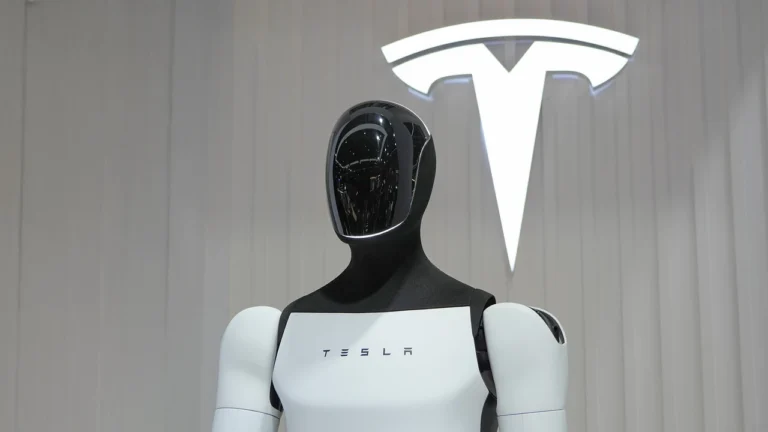
Artificial intelligence has long been secluded within servers and screens, proficient in language but lacking a tangible understanding of the physical world. However, with embodied AI, this is changing. This new era equips machines with bodies, enabling them to perceive consequences through sensors, reasoning engines, and actuators. Cameras and sensors stand in for eyes, while motors replace muscles. Embodied AI fosters a unique form of learning, prompting machines to interact with their environment to comprehend it, rather than relying solely on data.
The shift to embodied AI is revolutionizing various industries. Humanoids now work on assembly lines, robotaxis navigate city streets, and even vacuum cleaners map their surroundings. These advancements redefine intelligence as the ability to adapt and survive in the world, rather than merely describe it. Robotics constructs the physical form, while embodied AI teaches machines to think on their feet, quite literally, as they maneuver through factories, streets, and hospitals.
Innovations in artificial intelligence continue to push boundaries and challenge human perception. From a tiny, near-invisible Chinese drone with stealth capabilities to Malaysia’s PMX AI managing citizen queries autonomously, the realm of AI is expanding rapidly. Police robots directing traffic and humanoid robots mimicking famous figures showcase the diverse applications of this technology. However, public reception ranges from fascination to concern, as demonstrated by viral videos showing AI robots seemingly causing harm and even “marrying” in public ceremonies.
The history of artificial intelligence dates back to ancient times, where imagination gave rise to visions of autonomous beings like Greek mythology’s Talos. Centuries later, engineering brought these fantasies closer to reality, with mechanical automata and programmable machines emerging during the Islamic Golden Age. The birth of the term “robot” in Karel Capek’s play “R.U.R.” in 1921 marked a turning point, igniting curiosity and discourse around robotics and artificial intelligence. These developments paved the way for modern robotics as we know it today.
From the early days of concept to the present-day advancements, the evolution of artificial intelligence and robotics demonstrates a remarkable fusion of creativity, engineering prowess, and societal implications. As we continue to explore the capabilities of AI, the potential for innovation and transformation across industries and everyday life is boundless. The quiz section offers a fun way to test knowledge and learn about intriguing developments in the field of AI and robotics.
About the Author