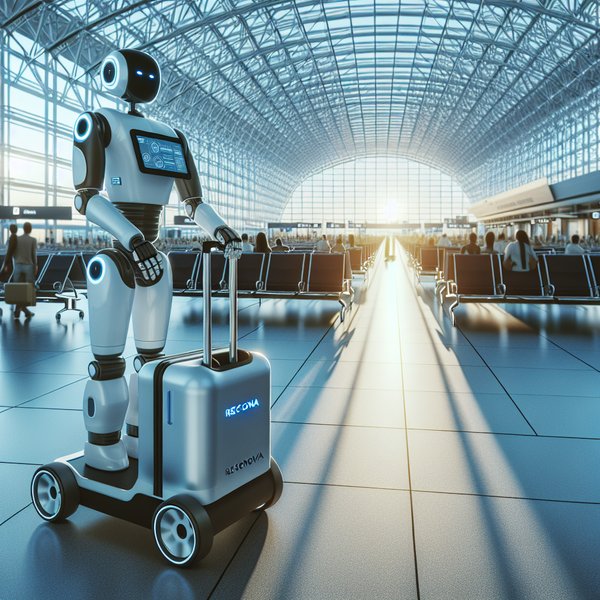
Reconova, a company deeply immersed in artificial intelligence for over 14 years, delivered a significant keynote at the recent China Embodied Intelligent Robot Industry Conference and Exhibition. The focus was on overcoming barriers in the commercialization of embodied intelligence in real-world scenarios. While many in the industry concentrate on general-purpose capabilities, Reconova stands out by prioritizing practical deployment and tangible execution in various sectors.
Established in 2012, Reconova navigated through two distinct eras of AI evolution. Initially, the main challenge was enhancing machines’ perception abilities to interpret images, identify objects, and comprehend scenes, aligning with the growth of deep learning. With time, the field underwent a consolidation phase as competition intensified, leading to a correction period with increased competition and tighter finances, prompting numerous companies to falter. However, Reconova’s strategic focus on niche applications like passenger processing in airports and driver assistance systems helped it sustain a leading market position amidst a turbulent landscape.
In the current AI landscape, the focus has shifted towards expanding capabilities beyond perception to include action. Reconova is transitioning from visual perception towards decision-making and execution, aiming to develop a comprehensive closed-loop system catering to commercial scenarios and intricate operations. Unlike some others in the industry, Reconova emphasizes specializing in vertical applications rather than chasing general-purpose capabilities, believing that detailed understanding of specific workflows builds stronger market positioning.
Reconova’s commercialization strategy targets specialized, complex scenarios that are anticipated to become commercially viable before general-purpose applications due to their ability to be optimized within defined constraints. An example of Reconova’s specialization is their focus on revolutionizing baggage handling in civil aviation, recognizing the industry’s labor-intensive nature and inefficiencies. By developing robots tailored specifically for this purpose, such as the AntOne robot showcased at events with promising outcomes, Reconova aims to enhance efficiency, reduce physical strain on workers, and streamline operations in challenging airport environments.
Embracing a hands-on, focused approach rather than a broad one, Reconova seeks to establish reliability and excellence in demanding environments, positioning itself uniquely in the evolving market landscape. Their measured strategy centered on addressing specific challenges with tangible outcomes illustrates a commitment to excellence and reliability in the field of embodied intelligence.
About the Author