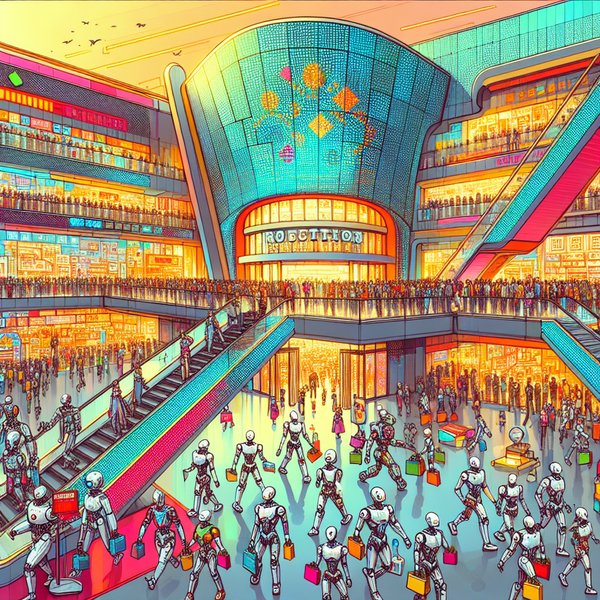
China recently inaugurated its first comprehensive shopping center entirely dedicated to robots, marking a significant step in the country’s effort to integrate robotics into everyday life. The Robot Mall, a four-story establishment situated in Beijing’s E-Town district, boasts a collection of more than 100 robots from over 40 prominent brands, including local companies like Ubtech Robotics and Unitree Robotics.
The layout of the Robot Mall resembles that of a car dealership, offering a complete range of services under the “4S” model commonly seen in China – sales, service, spare parts, and customer feedback opportunities all conveniently housed in one location. Wang Yifan, a director at the mall, emphasized the importance of not solely relying on robotics companies if robots are to become a common feature in households.
Robots available at the mall cater to various price points, starting at 2,000 yuan ($278) and reaching up to several million yuan. Notable offerings include a talking humanoid replica of Albert Einstein priced at 700,000 yuan ($97,473). Additionally, the mall features a themed restaurant where robot waiters serve dishes prepared by robot chefs. Visitors can engage with robots playing soccer or Chinese chess, interact with robot dogs, and meet animatronic recreations of historical figures.
The opening of the Robot Mall coincided with two significant robotics conferences in the city, further showcasing China’s commitment to the industry. The 2025 World Robot Conference kicked off on the same day, gathering nearly 500 experts from more than 20 countries to discuss the latest trends in robotics. The conference also served as a platform for approximately 200 robotics companies to showcase their recent research and development breakthroughs through over 1,500 exhibits.
Moreover, Beijing is set to host the 2025 World Humanoid Robot Games shortly after the conference, where humanoid robots will compete in various events to demonstrate their abilities. These events range from athletics, soccer, and dance to handling materials, drug sorting, and other challenging scenarios. Over 100 teams have already registered to participate, highlighting the growing interest and investment in robotics in China.
This push for advancement in robotics is part of China’s broader strategy to lead the global robotics race. The country has allocated substantial resources to the sector, with more than $20 billion in subsidies provided over the past year alone. In addition, there are plans to establish a one trillion yuan ($137 billion) fund to support AI and robotics startups, demonstrating China’s commitment to innovation and technology.
As China continues to bolster its robotics industry, some U.S. companies have called for the development of a national strategy to compete with China’s rapid progress. The rise of the Robot Mall and the upcoming robotics events in Beijing underscore the country’s dedication to advancing robotics and AI technology on a global scale.
About the Author