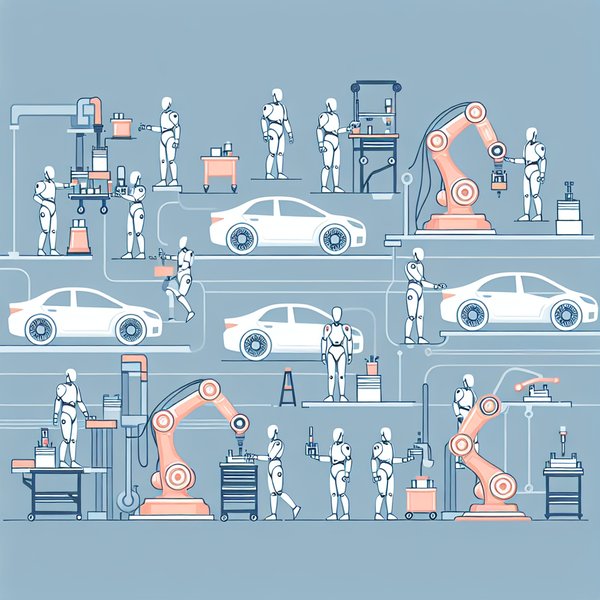
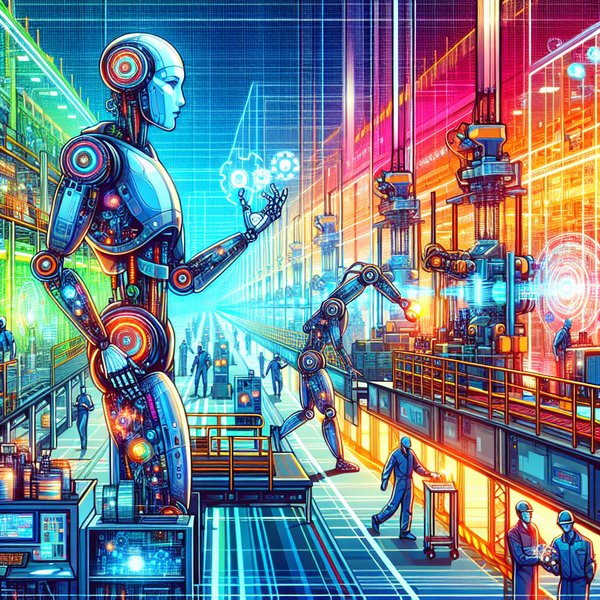
The field of robotics is undergoing rapid advancements, with a groundbreaking development poised to revolutionize how machines interact with the world. Researchers have introduced a system that allows robots to learn tool usage through observing human demonstrations in videos, akin to the way children intuitively learn. This innovative approach, discussed in a recent report by Tech Xplore, addresses a common challenge where many robots are limited to pre-programmed tasks and struggle in unpredictable environments without significant reconfiguration.
Utilizing sophisticated artificial intelligence models, the technology analyzes video demonstrations to extract key actions, subsequently adapting them to robotic hardware. For example, a robot can observe a person using a hammer and then replicate the action to drive a nail, all without needing explicit coding. This shift from rigid programming to observational learning has the potential to speed up deployment in dynamic environments such as manufacturing floors and disaster response scenarios, where adaptability is vital.
Building on prior studies, this method builds upon research from institutions like Carnegie Mellon University and Google DeepMind, where systems like RoboTool enabled robots to utilize tools creatively via language models. However, this new approach focuses more on video-based learning, reducing the necessity for human involvement in training. Experts believe that this capability could significantly reduce development time, enhancing the versatility of robots in various industries.
In the logistics sector, where efficiency is crucial, robots equipped with this learning mechanism could observe human workers to handle diverse packages, potentially integrating with electric vehicles and lockers, as demonstrated in a study from Concordia University referenced in Tech Xplore. This not only streamlines operations but also boosts safety by reducing errors in tool handling.
The robotics market is on an upward trajectory, with projections estimating growth to $258.3 billion by 2035, primarily fueled by AI integrations, according to a Future Market Insights report. Innovations such as AI humanoids from Techman Robot, slated for mass production in 2026, underline the trend toward autonomous systems that learn interactively, reshaping labor dynamics in factories and related sectors. Nonetheless, challenges persist, including ethical considerations surrounding AI decision-making in tool use.
Looking forward, the integration of observational learning with collaborative intelligence, where robots share information akin to swarm systems seen in nature, promises enhanced efficiency. A Tech Xplore report on robots with shared brains in warehouse settings exemplifies this potential by facilitating real-time coordination to avoid collisions. Likewise, bio-inspired sensors, like those inspired by scorpions for improved tactile feedback, could complement tool-learning algorithms.
The evolution of robots from mere machines to adaptive learners signifies a crucial moment for the industry. Companies are urged to invest in scalable AI frameworks to remain competitive. With forecasts indicating significant shifts in manufacturing and logistics, the era of video-trained, tool-using robots is not just on the horizon—it is already reshaping industrial practices.
About the Author