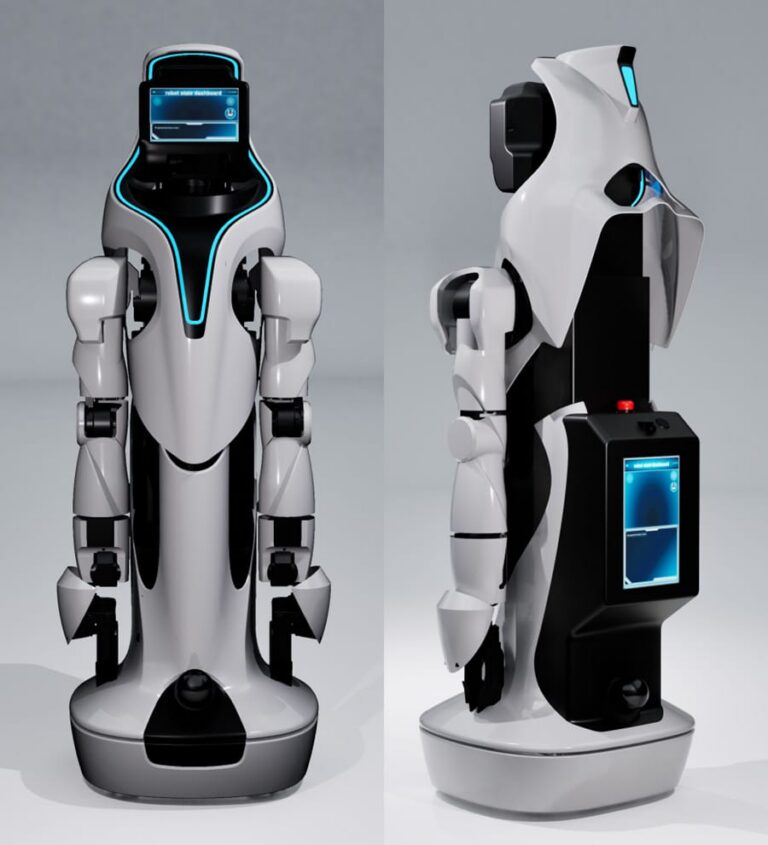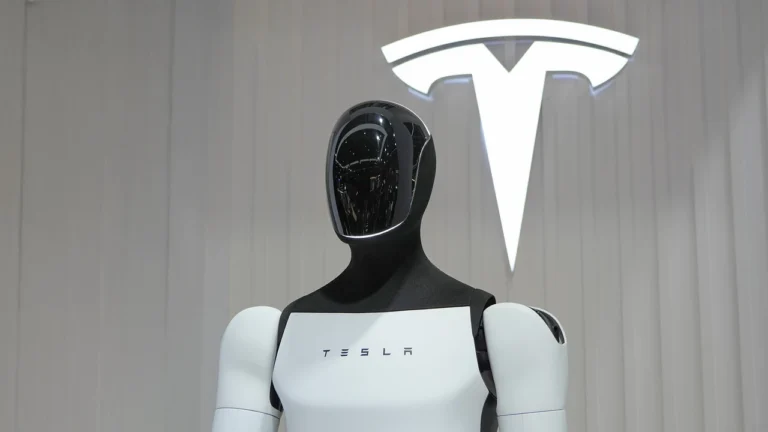
In a time of remarkable advancement in humanoid robotics driven by rapid technological progress and increasing interest from private entities and the public, the integration of humanoid robots into real-world environments alongside humans appears imminent. However, a key challenge to address is ensuring the resilience and independence of robot locomotion in dynamic settings.
To tackle this challenge, a combination of physical modeling and reinforcement learning is proposed in this study. This approach leverages the strengths of both paradigms – stability guarantees from modeling and adaptability from learning. The research begins with a comprehensive review of control and learning techniques for humanoid locomotion to identify effective methods that balance robustness, adaptability, and dynamic realism.
Building on this foundation, the PlaCo software is developed for motion planning and robot control. This software aims to simplify the complexity of optimization required for trajectory generation while maintaining real-time performance. Subsequently, a walking controller based on the Linear Inverted Pendulum Model (LIPM) is designed and implemented on the humanoid robot Sigmaban using this framework, demonstrating the model’s ability to generate real-time coherent trajectories while uncovering practical challenges on a physical platform.
In order to address these limitations and enhance adaptability to disturbances, a reinforcement learning agent specialized in fall recovery is created. Through simulation training, this agent is successfully transferred to the physical robot, showcasing improved autonomy. Nevertheless, the transfer difficulty underscores the significant gap between simulated and real-world environments, prompting a closer examination of reducing this disparity by enhancing simulation fidelity.
Furthermore, a detailed analysis of friction phenomena in servo actuators is conducted to illustrate how a more precise consideration of these effects enhances simulation quality and the applicability of control strategies. This holistic approach seeks to bridge the gap between simulation and reality, ultimately improving the performance and effectiveness of humanoid robot locomotion systems.
This study reflects the evolving landscape of humanoid robotics and offers valuable insights into advancing the robustness and autonomy of humanoid locomotion in dynamic environments, paving the way for seamless human-robot interactions in the future.
About the Author