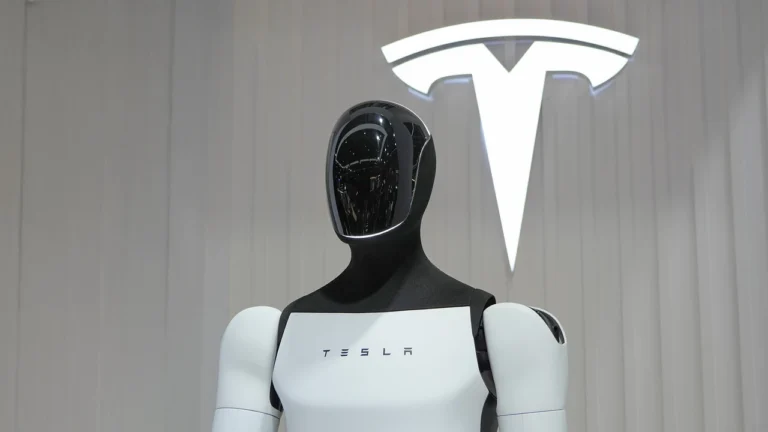
NASA’s humanoid robot, Valkyrie, is a striking figure, standing at 6 feet 2 inches tall and weighing 300 pounds. Named after a Norse mythology female figure, Valkyrie is undergoing testing at the Johnson Space Center in Houston, Texas. Its purpose is to operate in damaged or hazardous environments like those affected by natural disasters.
Engineers envision humanoid robots like Valkyrie operating in space in the future. These robots, designed with a humanoid form including a torso, head, two arms, and two legs, are believed to eventually function similarly to humans, using tools and equipment. NASA’s Dexterous Robotics Team Leader, Shaun Azimi, highlights that humanoid robots in space could perform tasks such as cleaning solar panels or inspecting equipment outside spacecraft, allowing astronauts to focus on exploration and discovery.
NASA collaborates with companies like Apptronik, based in Austin, Texas, to explore how humanoid robots initially developed for Earth-based tasks can benefit future robots intended for space missions. Apptronik is working on Apollo, a humanoid robot designed for tasks in warehouses and manufacturing plants, such as moving packages and stacking pallets. This robot is expected to be deployed in companies starting in early 2025.
Apptronik’s Chief Technology Officer, Nick Paine, emphasizes Apollo’s advantages over humans, particularly its endurance. The robot is designed to be operational for 22 hours a day with swappable batteries for uninterrupted work. Jeff Cardenas, the CEO of Apptronik, envisions expanding the robot’s capabilities through software development and deploying it into various industries, with potential applications stretching into unstructured environments, including space.
NASA is looking into adapting humanoid robots like Apollo for space missions by enhancing their modularity and functionality to fulfill diverse tasks. As technology advances, these robots could become instrumental in assisting astronauts and performing tasks in challenging space environments. The goal is not to replace humans but to augment their capabilities and focus on higher-level activities while robots like Apollo handle routine and hazardous tasks efficiently.
About the Author