Boston Dynamics recently introduced the first commercial version of its Atlas humanoid robot at CES 2026 in Las Vegas, transitioning from research demonstrations to practical applications. The company’s VP and GM for humanoid robots, Zachary Jackowski, highlighted that more than a decade of research and advancements in artificial intelligence enabled the commercial deployment of Atlas. The unveiling signifies a significant milestone for the company.
Designed for industrial tasks such as material handling and order fulfillment, Atlas is capable of moving freely, manipulating objects with its hands, and maintaining awareness of its surroundings during operations. With a lifting capacity of up to 110 pounds and a reach of about 7.5 feet, Atlas is optimized for efficiency in manufacturing environments where precision and speed are critical.
Boston Dynamics emphasized that Atlas’s design focuses on functionality and distinguishes it clearly as a robot, not a human, ensuring a productive and safe working partnership. Furthermore, Atlas is set to leverage Google DeepMind’s Gemini Robotics models to enhance its perception, task execution, and autonomy in factory settings, showcasing the fusion of robotics and AI technologies.
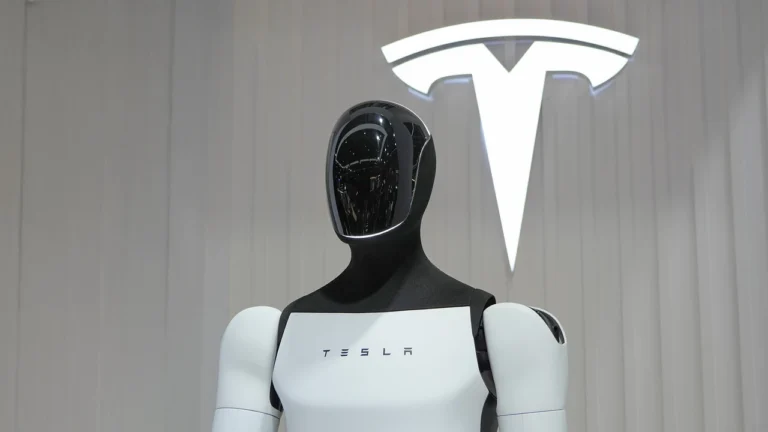
The growing interest in humanoid robots is evident as companies like Tesla, Hyundai, and Nvidia explore integrating robots into manufacturing and logistics operations. A report by Morgan Stanley anticipates the humanoid robot market to exceed $5 trillion by 2050, signaling a promising future for robotic applications in various industries.
Boston Dynamics’ partnership with Hyundai Motor Group, which acquired a majority stake in the company in 2021, underscores the strategic direction of the Atlas program. While the showcased Atlas prototype was guided by a human operator, the robot is designed to autonomously navigate real-world environments and ensure uninterrupted performance by autonomously managing its battery life.
Atlas can operate continuously for up to four hours by utilizing its dual swappable batteries, demonstrating its capability to self-navigate to the charging station for a quick battery swap before resuming operations. This innovative approach aligns with the industry’s trajectory towards incorporating humanoid robots in diverse sectors, promising increased efficiency and productivity in the near future.
About the Author