A cutting-edge tactile sensor known as SuperTac, developed by researchers at Tsinghua University’s Shenzhen International Graduate School in China, is revolutionizing the field of robotics. This innovative sensor, inspired by the visual structure of pigeon eyes, aims to address a major challenge in robotics by enabling robots to perceive touch with human-like precision and comprehension. The collaborative project involved various national and international institutions and was recently featured in a study titled “Biomimetic Multimodal Tactile Sensing Enables Human-like Robotic Perception,” published in Nature Sensors on January 15th.
As the era of embodied intelligence progresses, robots are transitioning from factory settings to more interactive human environments, necessitating advanced tactile sensing capabilities and better interpretation of physical interactions. Traditional tactile sensors have been limited by low resolution and poor data fusion, hindering robotic perception. In contrast, SuperTac represents a significant leap forward as a high-resolution, multimodal tactile sensor that integrates multispectral imaging and triboelectric sensing signals. With an ultra-thin, multi-layer sensing skin, it can achieve micrometer-level resolution and detect various parameters such as force, contact position, temperature, proximity, and vibration. Remarkably, SuperTac can identify material types, textures, slippage, collisions, and colors with an accuracy exceeding 94%.
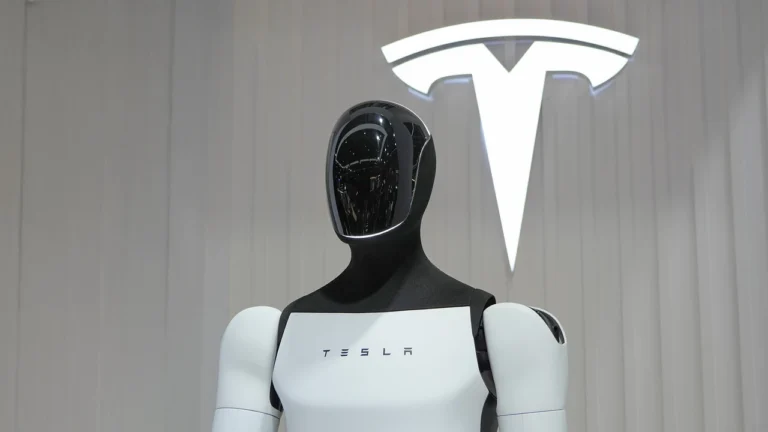
To handle the complex tactile data collected by SuperTac, the research team developed DOVE, an 850-million-parameter tactile language model. DOVE plays a critical role in allowing robots to interpret touch information in a manner more akin to humans, significantly enhancing their understanding of the environment and accuracy in manipulation tasks. The development of SuperTac also highlights the ongoing competition between China and the US in humanoid AI technology. While China excels in robot hardware, sensors, and large-scale implementation due to its strong manufacturing base and rapid research-to-product cycles, the US leads in AI software, foundational models, and autonomous intelligence, spearheaded by companies like Tesla, Figure AI, and Boston Dynamics.
By integrating SuperTac into robotic hands, real-time tactile feedback has become a reality. This breakthrough technology holds immense potential to revolutionize industries such as manufacturing, medical robotics, and service robots, bringing us closer to a future where robots can not only perceive their surroundings but also think and feel like humans. Ultimately, the success and leadership in the evolution of robotics will depend on the optimal synergy between advanced hardware and powerful AI algorithms.
About the Author