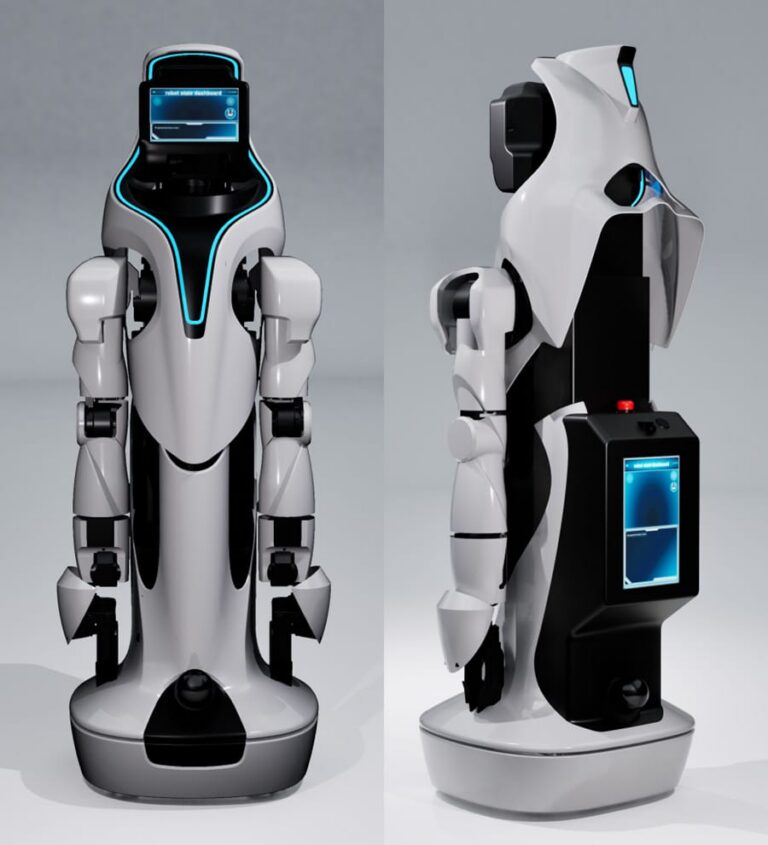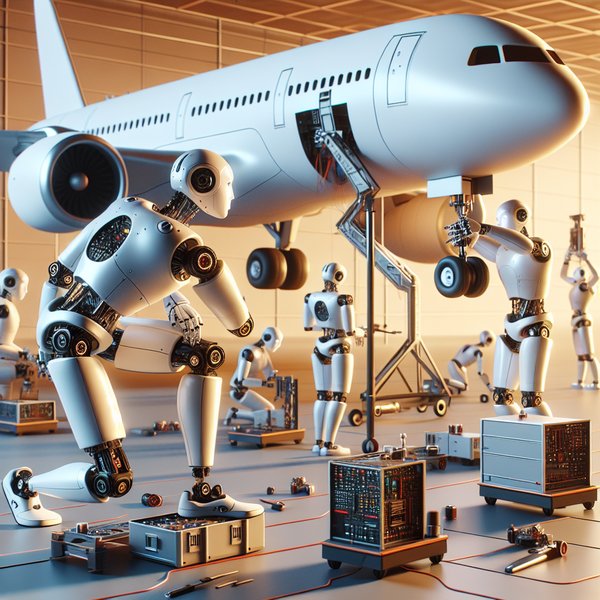
Airbus is venturing into the realm of humanoid robotics by acquiring robots from UBTech, a China-based company, reports Bloomberg. The renowned European aircraft manufacturer is exploring the integration of humanoid robots on its assembly lines through a collaboration with UBTech. Among the robots ordered by Airbus is the Walker S2, a full-scale humanoid standing at 176 cm (5’9″), weighing 70 kg (154 lbs), and capable of walking at a speed of two meters per second (4.5 mph). Equipped with agile hands boasting 11 degrees of freedom and tactile sensors, the Walker S2 can hold up to 7.5 kg (16.5 lbs) in each hand and 1 kg (2.2 lbs) with each finger. An innovative feature of the Walker S2 is its ability to hot-swap its own batteries, marking a significant advancement in humanoid robot technology according to UBTech in November 2025.
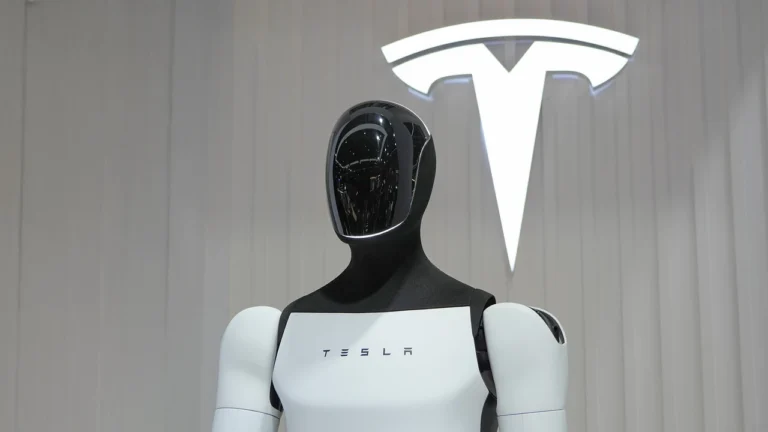
The versatility of the Walker S2 is evident in its ability to pivot almost 180 degrees at the waist, enabling seamless movement of components without adjusting its footing. The robot is designed with safety in mind, featuring an external emergency stop button and power switch positioned on its back. UBTech has already shipped approximately 1,000 humanoid robots, positioning itself as the third-largest supplier globally, trailing Agibot and Unitree but surpassing well-known western counterparts like Figure AI, Agility Robotics, Tesla, Apptronik, and Hyundai-owned Boston Dynamics. UBTech’s success extends to outpacing European competitors such as Neura Robotics in Berlin and the newly-funded Generative Bionics based in Italy.
UBTech aims to ramp up its industrial humanoid robot production to 5,000 units in 2026 and 10,000 in 2027, having already generated $112 million in sales as of November 2025. If these production figures hold true, the indicative price per humanoid robot would average $112,000, although this price is expected to decrease significantly as UBTech expands its operations in the coming years. While the specific terms of the Airbus-UBTech agreement remain undisclosed, it is likely an initial arrangement for testing and demonstration purposes. Inquiries have been made to ascertain if Airbus is considering similar partnerships with European robot manufacturers.
According to Bank of America’s projections, widespread adoption of humanoid robots is forecasted to commence in 2028. The evolution of humanoid robotics is regarded as the “space race of our time” by Apptronik CEO Jeff Cardenas, as evidenced by the substantial investments made in this sector. With China making notable progress in this field, it signals a new era in manufacturing efficiency that other nations are encouraged to pursue to remain competitive.
About the Author