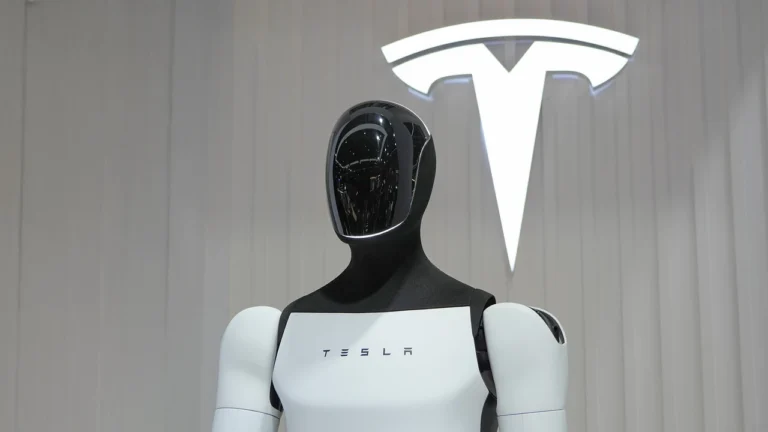
In the realm of artificial intelligence (AI) and robotics, Moravec’s paradox is a well-known concept that highlights a peculiar reality: tasks deemed intellectually challenging for humans, like logical reasoning or playing chess, are relatively simple for machines. Conversely, actions that humans perform instinctively, such as handing a screwdriver to another person, remain extremely difficult for robots.
This paradox is prominently featured at this year’s CES event in the US, taking place from January 6 to 9. Humanoid robots are attracting a lot of attention as they engage in activities like making coffee, serving ice cream, and posing for photos. Beyond the spectacle, a critical question emerges: how can these robots transition from mere demonstrations to practical applications in factories, warehouses, homes, and other real-world settings?
For PaXini Tech, a renowned company known for its tactile sensing technology, the key lies in what they term as a “full-stack infrastructure” for embodied intelligence. PaXini is constructing a foundation that integrates sensors, data, models, and robot bodies into a unified deployable system. Established in 2021, PaXini originates from the Sugano Laboratory at Waseda University, credited as the birthplace of the first humanoid robot. Leveraging their cutting-edge six-dimensional Hall array tactile sensing technology, the company has created high-precision sensors capable of detecting various tactile dimensions, including force, texture, and elasticity. The goal is to provide robots with a level of tactile perception akin to humans.
Founder Hsu Jincheng emphasizes that successful real-world implementation of robotics hinges on robots’ abilities to make accurate judgments and respond promptly during physical interactions involving touch, grip, force, and movement. By continuously interpreting real-time data on mechanics and motion, robots can develop a profound understanding of interaction dynamics. Only when robots can learn from physical contact and adjust their actions on the fly, will embodied intelligence transition from a theoretical concept in labs to a reliable and deployable productivity source.
At CES, PaXini is showcasing its product lineup, including tactile sensors, force sensors, dexterous hands, and humanoid wheeled robots like TORA-ONE and TORA-DOUBLE ONE. The presentation serves as a comprehensive overview of the supply chain for embodied intelligence, detailing each component’s role. Through live demonstrations, the DexH13 dexterous hand equipped with intelligent tactile processing units displays flexible gripping capabilities. Meanwhile, TORA-ONE, a humanoid robot, demonstrates human-like dexterity in tasks such as making ice cream, showcasing its ability in handling objects with precision.
PaXini does not simply position itself as a sensor manufacturer; sensors are just the starting point. The real value lies in the high-quality tactile and force data these sensors generate, crucial for training and deploying embodied intelligence systems. PaXini aims to bridge sensors, data, models, and robot bodies into an integrated stack tailored for real-world applications, catering to customers’ needs at every stage of development.
The company’s approach to data acquisition sets it apart, focusing on upper-body data acquisition through human movement to ensure data reusability and accuracy over time. This method is cost-efficient, faster, and aligns well with the transition of robots to mirror human proportions, enhancing the value of human-sourced data in the long term.
PaXini’s strategy encompasses incorporating sensors and robot platforms into a complete technical chain from perception to execution, fostering efficient and reliable model deployment. These humanoid robot platforms are currently undergoing validation in real-world scenarios like logistics warehouses and automotive manufacturing facilities, reflecting PaXini’s global ambitions.
In the next few years, PaXini foresees robots operating in actual production environments, leveraging their unique infrastructure to reshape the physical world through improved productivity. With a focus on markets in the US, Japan, and South Korea, PaXini plans to embed its hardware components into customer systems before expanding into data services to support automation upgrades. As robots transition from showcases to practical workhorses, PaXini’s infrastructure for physical contact modality may prove instrumental in reshaping the landscape of robotics and AI.
About the Author