Figure 03, the humanoid robot from Figure AI company, showcases its ability to start quickly, smoothly change directions, and brake abruptly while running in an indoor area. Brett Adcock, the CEO of Figure AI, posted a short video on social media on December 5th revealing the impressive agility of Figure 03. Adcock mentioned that the robot’s control system operates through an integrated neural network developed by the Helix team. Helix is a Visual-Language-Action (VLA) model announced by Figure AI back in February. The humanoid robot Figure 03 runs, changes direction, and brakes suddenly.
The movements of Figure 03 in the new video challenge the common perception that versatile humanoid robots are slow and bulky. For years, their weakness has been the lack of speed in movement. Many manufacturers do not disclose the maximum walking speed as the numbers are often not impressive. The previously announced speed of Figure 03 is approximately 4.3 km/h. Competing robots such as Digit from Agility Robotics or Phoenix from Sanctuary AI have maximum walking speeds ranging from 4.8 to 6.5 km/h. In the new clip, Adcock revealed that Figure 03 moves at a speed equivalent to a running person, around 10.5 km/h. Impressively, there are moments when the robot lifts both feet off the ground, true to the definition of running, demonstrating exceptional stability.
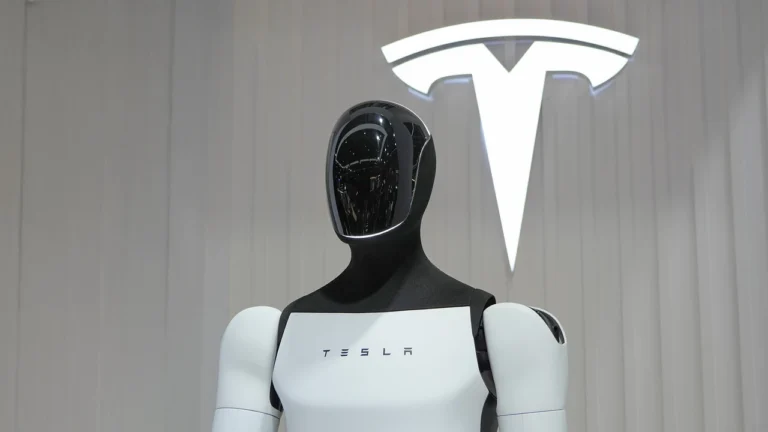
Furthermore, the robot can decelerate and change direction rapidly, showing significant advances in control systems and high-torque transmission mechanisms. A few days ago, Optimus, the humanoid robot from electric vehicle manufacturer Tesla, also created a buzz by running like a human at a fast speed, estimated at about 13.7 km/h or 3.8 m per second. According to Humanoids Daily, this speed is comparable to the fastest humanoid robots globally, surpassing STAR1 from RobotEra startup (China) with a speed of 3.6 m/s and H1 from Unitree (China) with a speed of 3.3 m/s.
Figure 03 is designed for mass production, ready to operate in both household and industrial environments. Standing at 173 cm tall, it is an upgraded version of Figure 02 with more sensitive sensors, a softer appearance, and better coordination. With a weight reduction of over 9% and significantly decreased volume compared to Figure 02, the new-generation robot moves much more smoothly, particularly in household settings. Figure 03 features soft and flexible hands equipped with fingertip sensors that can detect extremely light pressure, as low as 3 grams, approximately the weight of a paper clip. The high sensitivity allows the robot to handle fragile items like glassware safely, reducing the risk of them slipping from its grasp.
Credit: Thu Thao (Source: Forbes, Interesting Engineering)
About the Author