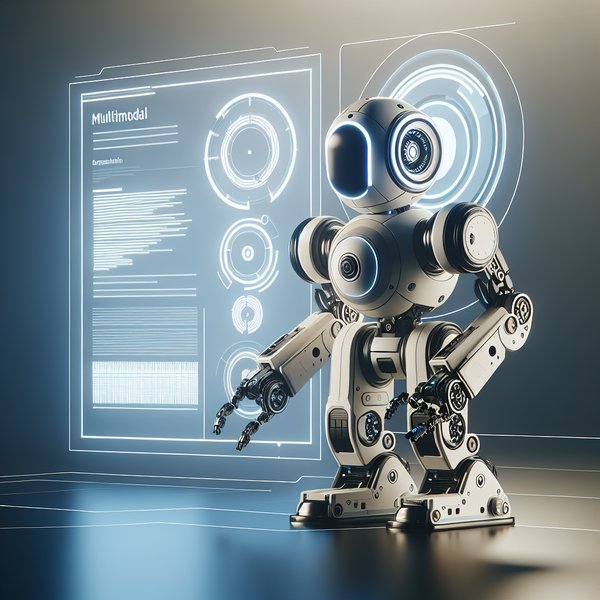
Google DeepMind’s Gemini model is making waves in the realm of artificial intelligence, pushing boundaries in robotics and web search integration. The Gemini Robotics, underpinned by the multifaceted capabilities of Gemini 2.0, is revolutionizing the field by enabling robots to interpret visual data, process natural language instructions, and carry out physical actions with unparalleled dexterity. Rather than just adhering to predetermined scripts, these robots can now adapt on-the-fly to dynamic environments, akin to how humans think and respond in real-time situations.
Engineers at DeepMind have showcased the versatility of Gemini Robotics in diverse tasks such as object sorting in cluttered spaces and navigating through obstacles while integrating feedback from online sources. For instance, a robot powered by this AI could seek information online during a task to optimize its approach, like searching for the most effective way to grip an unfamiliar object. This amalgamation of AI reasoning with physical embodiment is rooted in vision-language-action models, enabling what DeepMind terms as “embodied reasoning” – the capability to think and act in the physical world without exhaustive pre-training.
In industrial sectors like manufacturing and logistics, where adaptability is crucial for efficiency, Gemini Robotics offers profound implications. According to InfoQ, this technology seamlessly integrates with existing hardware, reducing the dependency on specialized datasets and facilitating swift deployment. The on-device processing minimizes latency, vital in scenarios requiring split-second decisions, such as in automated warehouses or surgical tools. The enhancement of web search capabilities through Gemini further elevates the sophistication level, enabling autonomous internet navigation to gather and synthesize information to enhance robotic operations.
The innovation of DeepMind with Gemini Robotics is poised to address longstanding challenges in AI safety and reliability. The model’s capacity to solve complex programming issues that perplex human experts raises hopes for improved robotics troubleshooting. However, concerns linger about the models’ scalability in handling real-world variability without errors that could lead to costly failures. DeepMind’s strategy includes open-sourcing components to encourage collaboration and innovation and to ensure robustness through collective expertise.
Looking ahead to the latter part of 2025, the integration of Gemini technology in sectors like healthcare and transportation could redefine operational standards. For example, robots leveraging Gemini might significantly contribute to elder care by dynamically adapting to patient needs via real-time cross-referencing of medical databases. While these advancements showcase promising potential, ethical considerations surrounding AI’s physical interventions necessitate regulatory frameworks. DeepMind’s commitment to safe AI, complemented by transparency in algorithmic decision-making, holds significance as Gemini evolves to create truly intelligent machines.
Despite the remarkable progress, challenges such as energy efficiency and hardware compatibility persist in AI-robotics integration. While on-device models are efficient, they require powerful processors that are not universally available in robots, potentially limiting adoption in budget-constrained sectors. Real-world testing demonstrates the need for Gemini Robotics to overcome unforeseen variables like lighting changes and human interference to realize its full potential.
In conclusion, Google DeepMind’s groundbreaking work with Gemini Robotics sets a high standard in AI innovation, compelling competitors to expedite their endeavors in multimodal AI. By merging web intelligence with physical actions, these advancements promise to transform robots into intelligent collaborators in human pursuits, marking 2025 as a pivotal year for widespread deployment.
About the Author