Nvidia Unveils Isaac GR00T N1: A Breakthrough in Humanoid Robotics
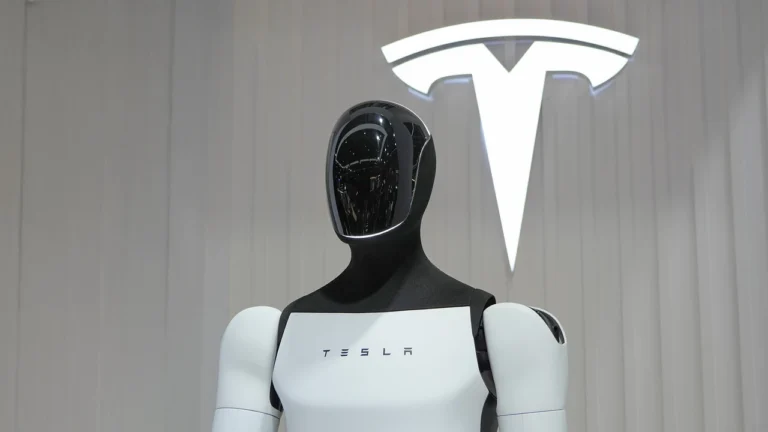
During GTC 2025, Nvidia showcased their latest innovation, the Isaac GR00T N1 — an open-source, pretrained foundational model aimed at accelerating the development of humanoid robots. This cutting-edge technology, heralded by Nvidia’s founder and CEO, Jensen Huang, marks a new era in robotics, emphasizing adaptability and learning capabilities.
The Isaac GR00T N1 model, designed to enhance robot reasoning and skills, was demonstrated in action by 1X’s NEO Gamma humanoid robot at the event. This powerful collaboration has set the stage for the next phase in AI-driven robotics, where humanoid robots evolve beyond mere tools into companions capable of meaningful interactions and assistance to humans.
Nvidia’s GR00T N1 foundation model, initially introduced as Project GR00T, boasts a sophisticated dual-system architecture inspired by human cognition. System 1, described as a “fast-thinking action model,” mimics human reflexes and intuition, while System 2, powered by a vision language model, focuses on reasoning and planning actions within its environment.
The versatility of the GR00T N1 model lies in its pretraining, which provides generalized skills and reasoning common to humanoid robots. However, developers have the flexibility to customize and enhance its capabilities by post-training it with specific data tailored to their needs, obtained from human demonstrations or simulations.
Several leading robotics companies, including Boston Dynamics, Agility Robotics, Mentee Robotics, and Neura Robotics, have early access to the GR00T N1 model, leveraging its advanced features to push the boundaries of humanoid robot development.
Nvidia has made the GR00T N1 training data and task evaluation scenarios accessible for developers through platforms like Hugging Face and GitHub, fostering a collaborative environment to further innovate in the field of humanoid robotics.
With this groundbreaking advancement, Nvidia’s Isaac GR00T N1 model paves the way for a future where robots transcend traditional roles and become integral companions in enhancing human experiences.
About the Author