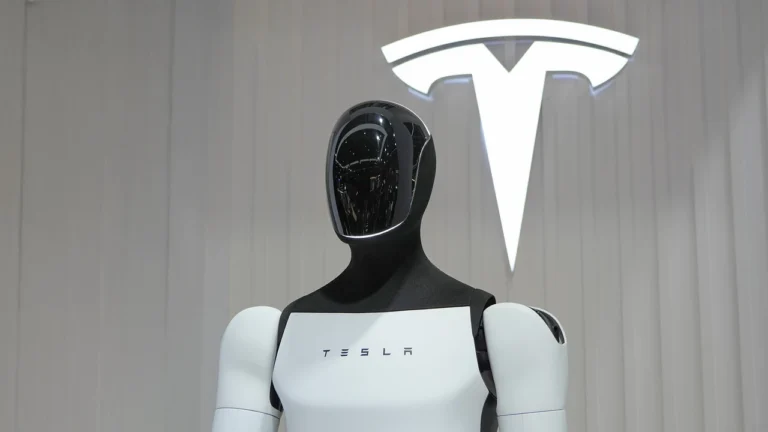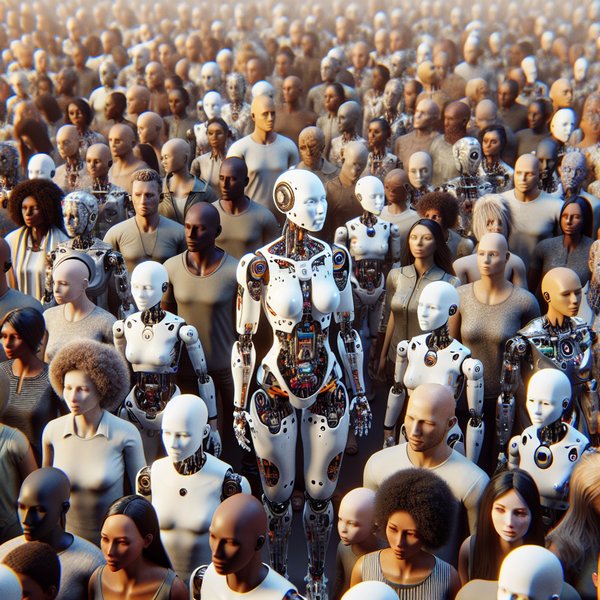
In a futuristic scenario depicted by Bernard Marr, a renowned contributor, we envisage a world where humanoid robots are an integral part of society. While this concept has long been portrayed in science fiction, a report from Morgan Stanley indicates that within less than a decade, millions of these robots could be operating alongside humans, engaging in various activities ranging from working and playing to offering protection and care. By 2050, it is predicted that there could be as many as one billion humanoid robots coexisting with us. As such, the readiness of society for such a monumental transformation, the potential implications of integrating intelligent robots into our lives, and the ethical considerations surrounding giving machines human-like intelligence and service capabilities must be pondered.
The report suggests that by 2035, there could be around 13 million humanoid robots functioning within society, priced at approximately $10,000 a year, positioning them as comparable in affordability to owning a car. This accessible cost is anticipated to drive significant commercial viability, leading to a surge in demand that could see the active robot count reach a billion within the next 15 years. Though a bold projection, real-world examples already exist where humanoid robots are in use. Notably, Agility Robotics’ Digit is operational in U.S. factories, performing tasks that were previously exclusive to human workers. Meanwhile, BMW and Foxconn have also trialed humanoid robots in their operations, showcasing their versatility in tasks such as opening doors, climbing stairs, and building equipment.
These advancements have been made possible by the progress in artificial intelligence (AI), particularly in areas like image recognition, language processing, and motor control. Despite their sophistication, the early-generation humanoid robots are still limited in their capabilities compared to the multifunctional, human-like robots depicted in movies. Instead, they are designed for specific tasks, akin to current AI applications such as ChatGPT and robotaxis. However, as humanoid robots evolve, their broader integration into various physical tasks and human-centric environments will pose both technological and societal challenges.
These challenges encompass the need for continuous advancements in battery technology and durable materials to support more advanced robot models and applications. Furthermore, the potential impact on human workforces, job opportunities, and mental health due to the widespread presence of robots in daily life needs to be carefully examined and addressed. The scenario of encountering one billion robots worldwide by 2050, with the U.S. expected to have a significant portion of domestic humanoid robots, implies a transformative shift across multiple sectors like healthcare, retail, hospitality, and education.
As humanoid robots become commonplace in homes, assisting with chores, caregiving, maintenance tasks, and security, questions regarding their role in governance, enforcement, and ethical treatment arise. The possibility of governments or private entities using robots for surveillance, security enforcement, or as companions raises concerns about robot rights and the ethical dimensions of their utilization. With the potential evolution of AI towards greater awareness and sentience, the coexistence of intelligent machines alongside humans could prompt a profound cultural shift in how we perceive intelligence and consciousness.
In conclusion, as we navigate the impending reality of humanoid robots permeating various aspects of our lives, it becomes imperative to confront the intricate ethical, societal, and existential questions that arise from this technological advancement. From redefining work dynamics and human-robot interactions to grappling with the implications of artificial intelligence encroaching on sentient qualities, the coexistence of humans and robots heralds a paradigm shift that necessitates thoughtful consideration and proactive adaptation.
About the Author