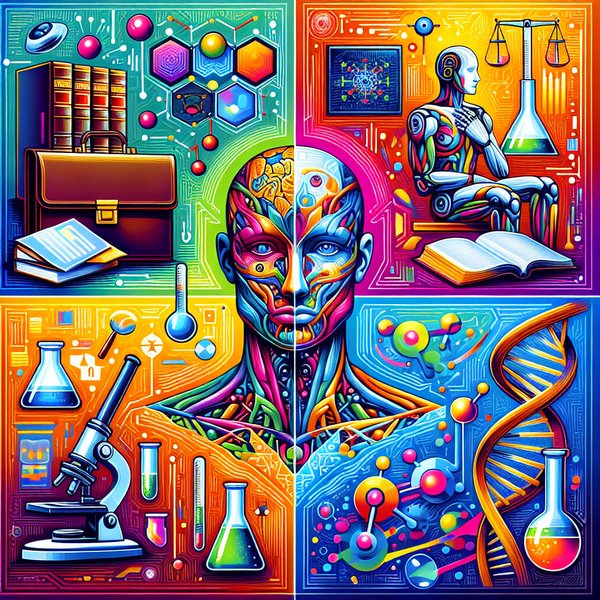
The introduction of chatGPT has sparked a revolution in various fields, showcasing remarkable achievements and pushing the boundaries of AI technology. This innovative tool, based on Large Language Models (LLM), has seamlessly integrated into daily routines, with people increasingly relying on its capabilities for various intelligent tasks.
One significant area where AI is making strides is in the legal sector, with startups like DoNotPay creating legal chatbots to assist defendants in court proceedings. These bots leverage LLM technology to provide real-time legal advice, aiming to revolutionize the legal landscape. However, challenges such as unauthorized legal practice and resistance from the traditional legal system highlight the need for regulatory clarity and acceptance of AI in legal proceedings.
In the realm of science, AI is proving to be a valuable resource, aiding researchers in tasks such as data analysis and hypothesis generation. Machine learning algorithms enable AI systems to identify patterns and offer insights that can lead to groundbreaking discoveries. While AI cannot independently formulate hypotheses, it serves as a powerful tool for scientists to explore new perspectives and approach problems innovatively.
The evolution of AI technology continues with the emergence of advanced chatbots like GPT-4 and innovative tools like AutoGPT, offering enhanced capabilities in handling tasks ranging from event planning to design. These advancements in AI technologies hold promise for various applications and industries, showcasing the potential for further growth and innovation.
Moreover, humanoid robots represent a remarkable achievement in AI, with advancements in computer vision and battery technology enabling robots to perform complex tasks with human-like behavior. Companies investing in humanoid robots for applications like warehouse work indicate a growing interest in leveraging AI for enhancing operational efficiency and productivity.
While AI lawyers, chatbots, and humanoid robots present promising opportunities, their adoption may be tempered by societal acceptance, legal considerations, and cost-effectiveness. As these technologies continue to evolve and mature, it is essential to address ethical, legal, and practical challenges to maximize their potential benefits while ensuring alignment with societal values and norms.
About the Author